 (Image source: Gemini)
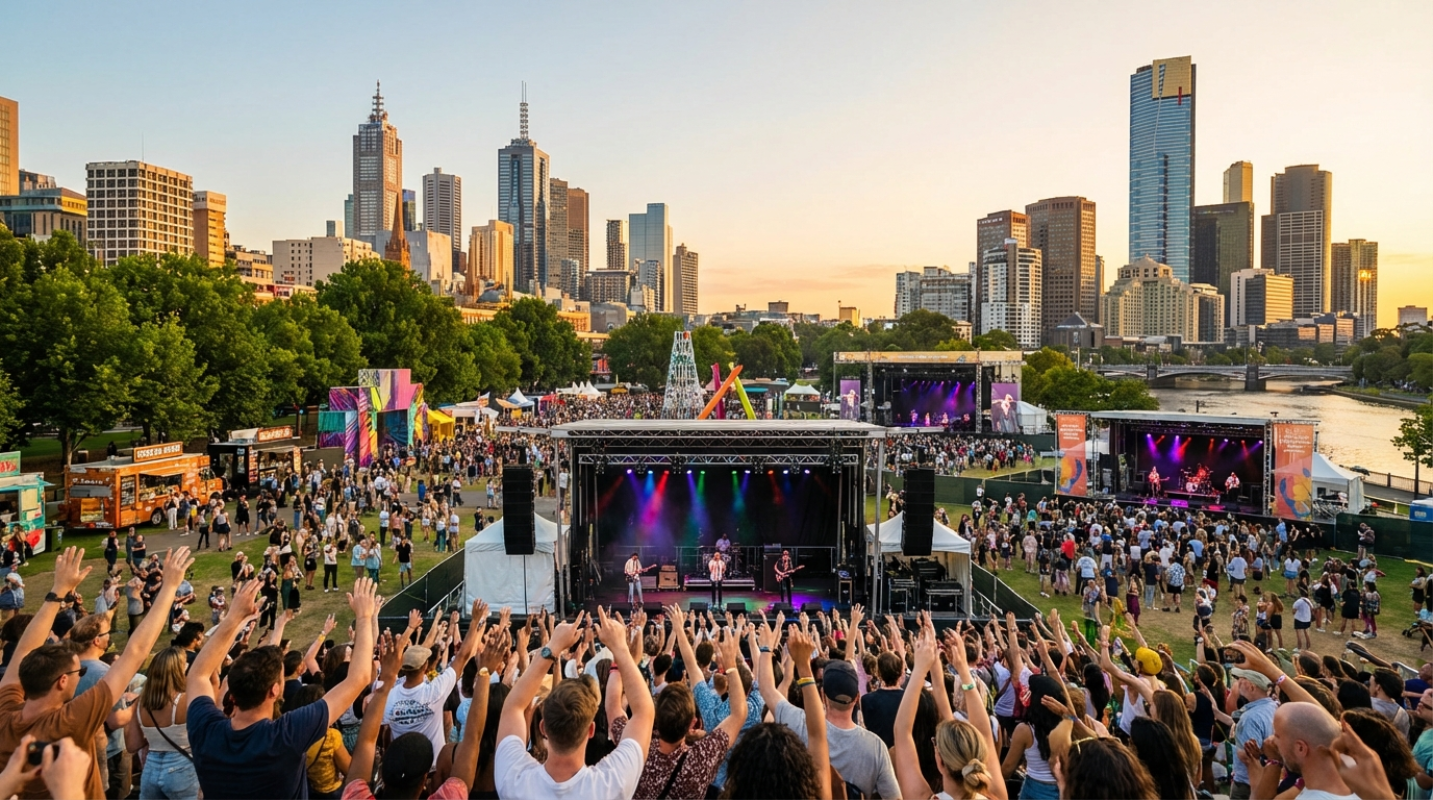
 If you want to understand the modern competitive edge of a major metropolis, don't look at its skyline. Look at its summer calendar. The world’s most exciting cities aren't just building towers; they’re building culture. And right now, the most powerful tool in that cultural arsenal is the multi-genre annual music festival.
Multi-genre music festivals are more than just weekend parties. We’re talking about massive annual gatherings that intentionally mix electronic, rock, pop, folk, and global music traditions, drawing diverse crowds that wouldn’t otherwise share a concert venue.
These events are powerful cultural anchors. They define urban cool, attract global attention, and, importantly, they pump serious money into the local economy. If you want to know what makes a city truly active, look at the signature multi-genre festival it hosts.
The Economic Crescendo
When a city commits to hosting a major annual festival, it’s making a deep investment in its own brand. Think about cities like Chicago, Austin, or Miami. Their identity is now inextricably linked to the massive cultural events they host every year.
So what does this actually mean for the city treasury? It means stability. Although the overall U.S. music tourism market is massive, the real power of these annual events is their economic multiplier effect. When we look at the big picture, independent venues and festivals contributed an estimated $86.2 billion directly to U.S. GDP in 2024, and roughly $153 billion if you include all the indirect spending.¹ That’s not pocket change; that’s a core industry.
The economic boost goes far beyond the gates. It’s the hotel occupancy rates that spike 90% during the festival week. It’s the restaurants and bars that see record sales because of thirsty, hungry out-of-towners. This is the "Halo Effect" in action: the festival buzz boosts the city’s brand identity year-round, making it a more desirable place for younger workers and creative businesses.
Take Miami, like. Its signature electronic event, Ultra Music Festival, is estimated to contribute about $79 million annually to Miami-Dade County.² Over its long run, that single event has generated over a billion dollars in economic activity for the city. That money supports local jobs, funds infrastructure improvements, and validates the city’s decision to dedicate valuable public space to art and noise for a few days a year. If you’re a city leader, securing or growing one of these signature events is a no-brainer for fiscal health.
Curation as Culture
The operational challenge of a multi-genre festival is immense. It’s not enough to book five major headliners and call it a day. The art of curation lies in building a lineup mosaic that appeals to everyone from the 18-year-old chasing viral TikTok sounds to the 50-year-old looking for a legacy act they saw in college.
Why is this genre diversity so important? It’s a hedge. A rock-only festival might struggle if the rock scene cools off for a year or two, but a festival that balances hip-hop, indie, electronic, and global sounds make sures consistent attendance, regardless of which genre dominates the charts that year.
The balancing act requires deep industry knowledge. Organizers have to coordinate the massive technical needs of a stadium-filling pop star with the intimate, high-fidelity requirements of a jazz ensemble, often on stages just a few hundred yards apart. This is where the city’s existing infrastructure becomes key. Urban parks and repurposed industrial zones, like those used in Chicago or Barcelona, are ideal because they can accommodate the diverse staging and sound needs.
Think about the logistical complexity of managing sound bleed. You can’t have a heavy metal band drowning out the delicate harmonies of a folk singer. Successful city festivals work closely with sound engineers and city planners to make sure that the sound bounces off buildings in a controlled way, minimizing disruption to the neighborhood while getting the most from the experience inside the park. This careful architectural negotiation is what allows these festivals to exist in dense urban environments, appealing to broader demographics and securing their future year after year.
Beyond the Music
The best annual festivals understand that they can’t just parachute into a city, make a lot of noise, and leave. They have to integrate. They need to become a temporary, hyper-active version of the city itself.
A major way this happens is through urban activation. These events transform otherwise underused urban spaces - a massive waterfront park, a parking lot, or an old airfield - into functioning, temporary cultural hubs. They aren’t just building stages; they are creating temporary infrastructure that shows local talent and businesses.
Look at the focus on local vendors. Instead of importing national chains, successful festivals prioritize city partnerships, making sure that the food, drink, and artisanal goods sold on site come from within the metro area. This keeps money flowing directly into the community. Plus, the installation of large-scale public art, often commissioned from local artists, turns the festival grounds into an interactive gallery.
Of course, hosting 100,000 visitors always creates logistical friction. Traffic snarls, noise complaints, and security concerns are inevitable. But the most successful partnerships involve deep city-organizer collaboration. This means working with local transit authorities to offer specialized routes, coordinating police and fire services well in advance, and establishing clear lines of communication with neighborhood associations to address concerns immediately. When residents feel heard, and when the festival actively involves local schools or charities, resident acceptance remains high, which is needed for making sure those annual permits keep getting renewed.
Sustainability and Scaling the Spectacle
As these multi-genre festivals grow in size and global stature, the pressure to operate responsibly intensifies. The future of urban events is inherently tied to sustainability. No city wants to host a spectacular party that leaves behind a massive carbon footprint.
We’re seeing a significant shift in operational standards. Organizers are moving away from the "environmental utopianism" of the past and implementing real, measurable metrics. The average site recycling rate across assessed festivals, like, increased from 38% in 2022 to nearly 49% in 2024.³ That’s progress, but there’s still a long way to go.
The biggest challenge for urban festivals isn't the plastic cup, though reusable systems are now standard practice. It’s audience travel. Getting hundreds of thousands of people into the city is a carbon headache. Audience travel often accounts for 35% to 94% of a festival’s total carbon footprint.³ This is why cities are focusing heavily on soft mobility solutions: dedicated bike parking, massive public transport integration, and incentives for using metro lines rather than personal vehicles.
Top Cities for Music Festivals
Here are the cities currently dominating the annual festival circuit:
1. Chicago, Illinois: Lollapalooza
Chicago manages one of the most logistically impressive feats in the world by hosting Lollapalooza right in the middle of the city.
- The Venue: Grant Park. It’s a 300-acre "front yard" for the city, bordered by Michigan Avenue and Lake Michigan.
- The Model: While it started as a 90s alternative rock tour, the Chicago version is now the definitive multi-genre beast, mixing heavy EDM, top-tier hip-hop, and massive pop headliners.
- Urban Integration: It uses the city's skyline as a backdrop and relies heavily on the "L" train system to shuttle 100,000 people a day in and out of the downtown loop.
2. Austin, Texas: Austin City Limits (ACL)
Austin brands itself as the "Live Music Capital of the World," and ACL is how they prove it every October.
- The Venue: Zilker Park.
- The Model: It spreads across two consecutive weekends to double the economic impact. The curation leans into Austin’s roots—plenty of folk and rock—but balances it with massive global stars like Dua Lipa or Kendrick Lamar to stay relevant.
- Local Focus: They have a strict "Austin Eats" program, meaning every food vendor has to be a local business, keeping that festival money circulating in the city.
3. Miami, Florida: Ultra Music Festival
Miami is the global capital for electronic music, and Ultra is the annual anchor for "Miami Music Week."
- The Venue: Bayfront Park, right on the water in Downtown Miami.
- The Model: It’s almost entirely electronic, but it functions as a multi-genre event within that space—hosting everything from underground techno to mainstream house and live synth-pop acts.
- Economic Clout: As mentioned, this single event brings in nearly $80 million a year, making it a cornerstone of Miami’s tourism industry.
4. Indio, California: Coachella
You can’t talk about multi-genre festivals without Indio. Even though it's in the desert, the city’s infrastructure is now built specifically to support the Coachella Valley Music and Arts Festival.
- The Venue: Empire Polo Club.
- The Model: It’s the trendsetter. Coachella is where genres go to die and be reborn; it was one of the first to give Latin music and K-Pop equal billing with legacy rock acts.
- Global Draw: Because it’s a "destination festival," it forces an massive influx of wealth into the Coachella Valley, sustaining the local hospitality sector for the entire year.
5. Barcelona, Spain: Primavera Sound
In Europe, Barcelona sets the pace with Primavera Sound, which has become the gold standard for curated, multi-genre lineups.
- The Venue: Parc del Fòrum, an industrial, seaside site that looks like a sci-fi set.
- The Model: It’s famous for "gender-balanced" lineups and for being the first to mix high-brow indie with massive reggaeton and pop acts.
- City Life: Unlike US festivals that end at midnight, Primavera goes until 6:00 AM, integrating with Barcelona’s late-night culture and utilizing the city's night-bus and metro networks.
The competitive space among major cities is heating up. Securing a signature, multi-genre event is now seen as a important component of global city competitiveness, right alongside hosting major sporting events or attracting tech headquarters. Cities are actively vying to secure or expand their events, knowing that this annual sonic spectacle is an needed component of modern urban keyity. It’s where culture, commerce, and community collide, creating something genuinely unforgettable.
Sources:
2. How Miami’s Music Festivals Are Driving Tourism and Economic Growth
3. AGF Report Shows Festivals Going Plant-Based and Increased Focus on Recycling
.png)
.png)