 (Image source: Gemini)
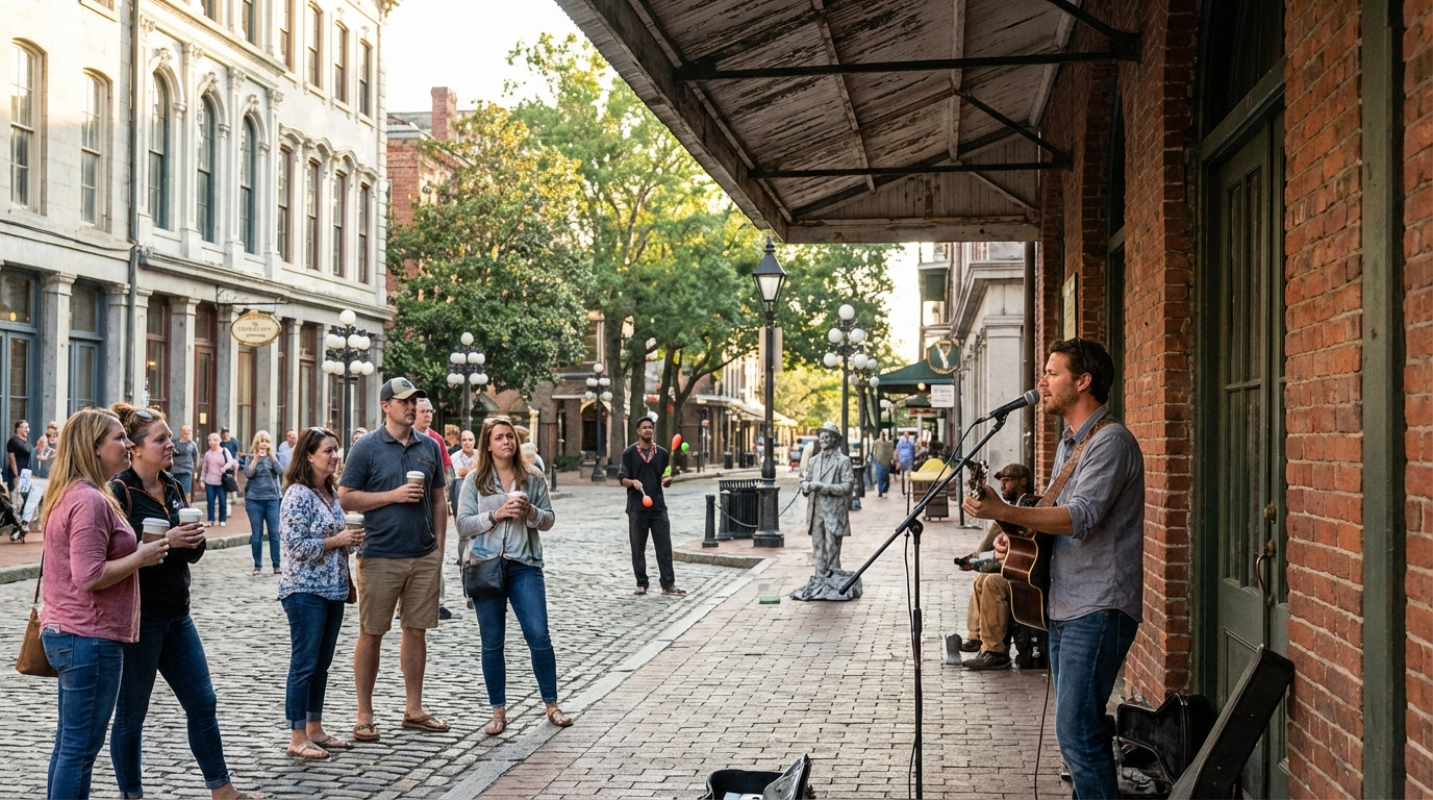
 Have you ever stood in a city square where the stones were laid centuries before your country was even a thought, only to be snapped back to the present by a beatboxer or a string quartet? It's a weird, beautiful friction. You're surrounded by the weight of history, yet the air is full of something happening right now. That's the pull of a great historic district. It isn't just a museum of old buildings. It's a stage.
When we talk about these districts, we're looking at places where the city’s past meets its modern pulse. You've got the buskers, the living statues, and the musicians who turn a simple walk to get coffee into a front row seat at a concert.
The European Charm and Classical Melodies
Europe is the heavyweight champion of this vibe. Think of places like Prague’s Old Town Square or the winding streets of Trastevere in Rome. In these spots, the performance style often leans toward the theatrical or the classical. You might turn a corner and find a full string quartet playing Mozart under a Gothic arch. It’s the kind of thing that makes you feel like you’ve accidentally walked onto a movie set.
London, but remains the gold standard. Covent Garden and the South Bank are in the big leagues for street performers. If you're a "circle act" (think comedy, magic, or high-level acrobatics) this is where you want to be. But the rules have changed recently. Westminster Council tightened the screws on licensing, and by mid-2025, they actually suspended several key pitches in Leicester Square because of noise complaints. Now, you’ll find the real magic has drifted toward Trafalgar Square and the South Bank.
If you’re watching these pros, remember the etiquette. It’s not just about the money, though that’s a big part of it. These performers often pay for permits. In London, a six-month permit can cost around £40, and the best spots require a literal audition. If you stop to watch a full set, don't just walk away when the hat comes around. It’s the digital equivalent of dining and dashing.
North American Vibrancy and Theatrical Squares
Across the Atlantic, the energy shifts. It’s less about classical quartets and more about brass, jazz, and high-energy spectacle. Take the French Quarter in New Orleans. Jackson Square and Royal Street are the places to be if you want to hear the best jazz in the world for the price of a tip. Although it used to be a free-for-all, the city now requires a Mayoralty Permit. It’s still relatively cheap at about $10 a day, but it keeps the quality high.
Then you have Pike Place Market in Seattle. This is one of the oldest busking traditions in the U.S., going back over 50 years. It’s a very specific environment. Because the market is a giant echo chamber, they have a strict "no brass and no drums" rule. It’s all acoustic. You’ll hear incredible folk singers, cellists, and guitarists who have to move to a new spot every hour to keep things fair.
Top Recommendations
If you're planning your next trip and want to make sure you're in central the action, these districts are your best bets for 2026.
- Covent Garden, London - Still the world leader for variety. Look for the "West Piazza" for the big comedy and magic acts that draw huge crowds.
- Bourke Street Mall, Melbourne - Often called the busking capital of the Southern Hemisphere. It’s a launchpad for professional musicians, and the 2024 local laws mean the quality is incredibly high.¹
- Royal Street, New Orleans - The best place for daytime jazz. Unlike the rowdiness of Bourbon Street, Royal Street is where the serious musicians set up.
- The Royal Mile, Edinburgh - Especially during August. The Edinburgh Fringe turns this historic stretch into a 24/7 carnival of the weird and wonderful.
Discovering Hidden Gem Districts
You don't always have to go to the world's biggest cities to find great street art. Sometimes the smaller districts offer a more authentic experience because they aren't as crowded with "tourist trap" performers. Think of places like the Old Town in Tallinn, Estonia, or the historic center of Oaxaca, Mexico. These spots don't have the massive crowds of London, which means you can actually talk to the artists.
How do you find these spots? Use the tech in your pocket. Local apps and forums are your best friends here. By 2025, global QR code transactions were projected to hit over $3 trillion, and that tech has filtered down to the street level.³ Most serious buskers now have a QR code on their sign. Scan it. can you tip them, but it usually leads to their Instagram or Spotify. That’s how you find out where they’re playing next or which hidden alleyway has the best local scene.
Practical Traveler Tips for the Best Experience
To get the most out of these historic districts, timing is everything. Most people head out right after lunch, but the real pros know about the "twilight trade." In cities like Melbourne, there’s been a nearly 20% jump in spending between 5 PM and 10 PM.¹ This is when the lighting is perfect, the crowds are relaxed, and the performers are playing their best sets.
There's also the "120-foot rule" to keep in mind, especially in U.S. districts. Many cities require performers to move at least 120 feet every hour or two. If you find a spot you love, don't be surprised if the performer packs up suddenly. They aren't quitting; they're just following the law.
- Support the art - Most performers now prefer digital tips. Statistics show that buskers using QR codes see a 25% to 40% increase in their earnings compared to cash-only acts.³
- Be aware of your surroundings - Historic districts are often crowded. Although you’re mesmerized by a fire-eater, keep an eye on your bag. Pickpockets love a good street performance as much as you do.
- Respect the "Pitch" - If there’s a line on the ground or a specific area marked off, don't stand in it. That’s the performer’s stage. Crossing that line is like walking onto a Broadway stage mid-scene.
Your Next Unforgettable Performance
There's something about the combination of ancient stone and a fresh melody that sticks with you. It’s a reminder that these historic districts aren't just relics of the past. They're living, breathing parts of the city. In a world where so much of our entertainment is buffered and streamed, there’s nothing like the raw, immediate connection of a live performance on a street corner.
As we move through 2026, the scene is only getting more professional. Music tourism is a massive economic driver, contributing billions to local economies.⁴ This means cities are investing more in making these districts "performer-friendly." So, on your next trip, don't just rush to the museum. Slow down, find a spot on a stone bench, and wait. The best show in town is probably about to start right in front of you.
Sources:
.png)
.png)