 (Image source: Gemini)
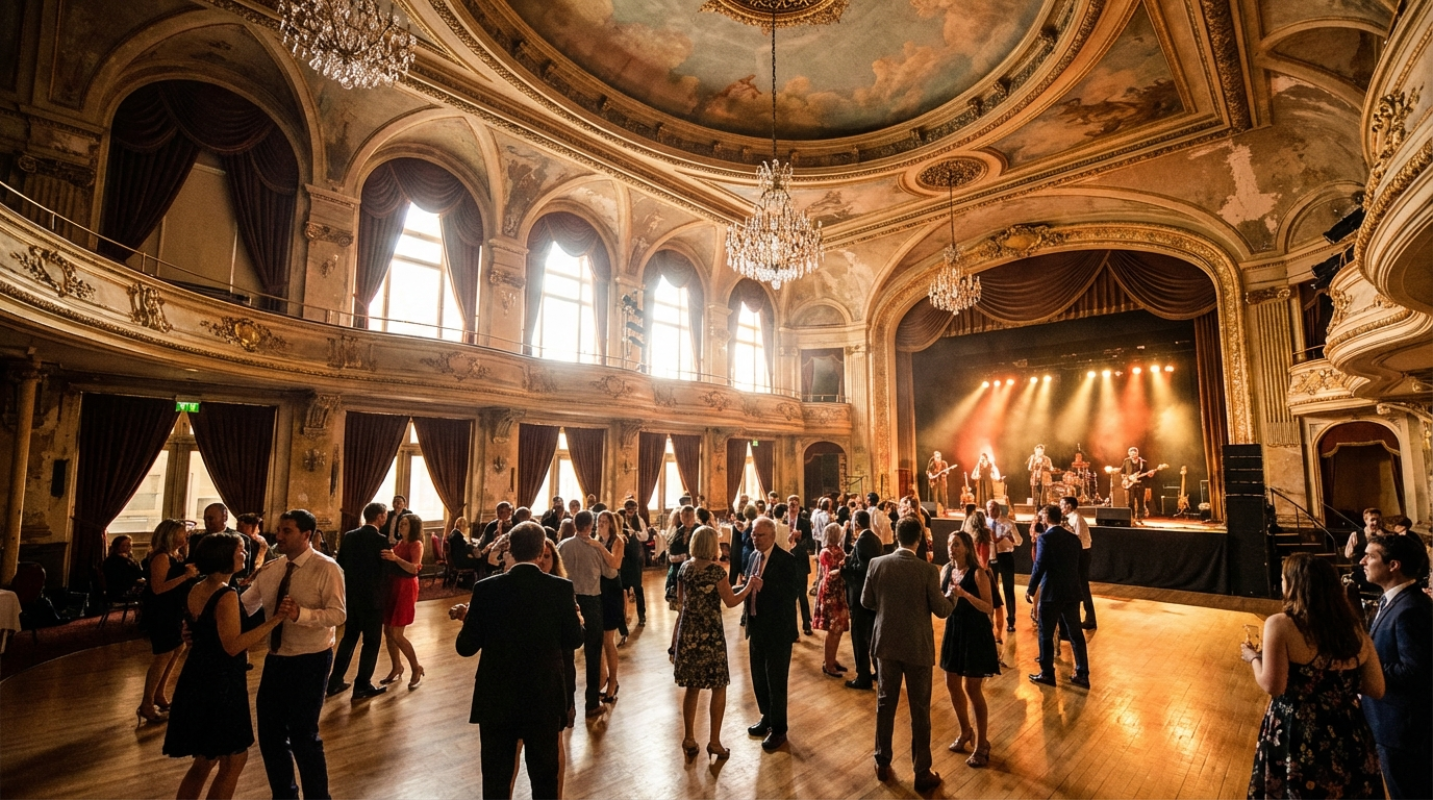
 There is a feeling you only get when you walk into a historic ballroom, a physical vibration of history that modern venues simply cannot replicate. You know the moment: the air smells faintly of old wood and spilled champagne, the lighting hits the ornate plaster just right, and you look up at a chandelier that has witnessed a century of celebration.
This isn't just nostalgia talking. It’s a genuine difference in atmosphere. When you attend a concert today, you often find yourself in a sterile, black box theater designed for maximum efficiency. But when a band plays beneath the soaring, painted ceilings of a 1920s dance hall, the experience shifts. It becomes something richer, something communal. These historic ballrooms, built for the waltz and the foxtrot, are now the unexpected, magnificent homes for everything from indie rock to stand-up comedy.
What exactly makes a venue "historic"? It’s more than just being old. It means architectural significance, often dating back to the Gilded Age or the roaring twenties, coupled with a history of hosting legendary performers. These are the spaces that refuse to be relegated to museums, insisting instead on hosting the next generation of musical chaos.
Stepping Back in Time Why Ballrooms Endure
Why do we still flock to these gilded cages when we could be in a climate-controlled stadium? Because these rooms were designed for human interaction, not purely for profit. They possess a unique acoustic signature that modern builders struggle to replicate, regardless of the technology they throw at the problem.
Think of the difference between listening to music on a high-end digital speaker and hearing a song played on a vintage vinyl record. The vinyl has warmth, texture, and a slight imperfection that makes it feel alive. That’s the historic ballroom effect.
These spaces endure because they offer a deep connection to the past. When you’re watching a touring rock band at Cain's Ballroom in Tulsa, you’re standing in the same room where Bob Wills pioneered Western Swing. You are part of a continuous, living cultural lineage. That energy is irreplaceable.
The Architectural Marvels Acoustics and Ambiance That Modern Builds Can't Replicate
The secret to the lasting appeal of these grand spaces lies quite literally in the architecture itself. Historic ballrooms weren't built with drywall and exposed ventilation. They were constructed using heavy, natural materials: thick timber, ornate woodwork, and expansive, high ceilings.
Sound and Structure
These engineering choices, though often accidental in terms of modern sound design, contribute massively to the atmosphere. The high ceilings and the massive volume of the room allow sound waves to develop naturally. In many cases, the original design intent was for unamplified speech or orchestral music, requiring the structure itself to carry the sound.
Take the famous "floating" dance floor at the McMenamins Crystal Ballroom in Portland, Oregon. This design, built on massive springs, allows the entire floor to bounce and move with the crowd. It’s a sensory experience that improves the energy of the performance, something no modern concrete slab can offer.
But the beauty of the architecture often presents a challenge. Traditional materials like stone, hard plaster, and painted ceilings are highly reflective. This can lead to excessive reverberation, making amplified music muddy and unclear.¹ Acousticians today must integrate modern solutions that are both effective and completely discreet. They might install sound-absorbing panels designed to mimic 18th-century frescoes or strategically place soft furnishings to manage sound waves without compromising the look. It’s a brilliant balancing act between preservation and performance.
From Swing to Synth - The Unexpected Modern Lineups
If you think historic ballrooms are only hosting big band revivals, you are missing the best shows of the year. The programming in these venues is incredibly diverse, proving that old elegance can easily accommodate new grooves.
Consider London’s Wilton's Music Hall, the oldest Grand Music Hall in the world. It’s a Grade II* listed building that hosts over 300 performances and 80 productions annually.² You might catch a cutting-edge experimental theater piece one night and a massive indie rock show the next.
In the US, venues like The Bowery Ballroom in New York City, constructed in 1929, regularly host indie rock, folk, and electronica acts, maintaining an intimate setting that blends old-world charm with surprisingly contemporary acoustics. These spaces aren't afraid of noise; they embrace it.
The Logistical Tightrope
Of course, running a 100-year-old venue in 2026 is a logistical nightmare. Imagine trying to install modern sound rigging and lighting systems into a ceiling protected by historic preservation rules. You can’t just drill where you want.
Safety and accessibility are paramount. Making sure accessibility compliance, such as ADA requirements in the US, often requires structural modifications that must be painstakingly integrated without destroying the historical fabric. Plus, modern mechanical systems, including HVAC, are huge. Installing new ventilation can consume up to 10% of a building's square footage and account for 30% to 40% of the overall rehabilitation budget. It’s expensive, time-consuming work, but it’s needed to keep the doors open.
The Economics of Elegance Keeping History Profitable Today
It takes serious money to keep a century-old roof from leaking and to power a major rock concert. The average historic theater restoration project costs between $5 million and $30 million and can take five to ten years to complete.⁹ This isn't a cheap hobby.
So, how do these venues survive? They master the multi-use business model.
Although ticketed performances are the heart and soul of the operation, the financial viability of heritage venues often rests on private rentals. Weddings, corporate events, film shoots, and private parties provide the consistent revenue stream needed to offset the astronomical maintenance costs. That grand chandelier looks just as good above a black-tie gala as it does above a mosh pit.
Dedicated preservation societies and community trusts also play a key role, often funding the expensive, non-glamorous work like fixing leaking roofs or updating antiquated electrical systems. It's a combination of cultural passion and shrewd financial management that keeps the lights on. The continued demand for unique, high-quality event spaces proves that elegance, when managed correctly, remains a profitable commodity in the modern entertainment market.
Prestigious Ballrooms
If you’re looking to experience the magic yourself, seek out these spots. These are the places where the past and the present collide, giving you a show you won’t forget.
- McMenamins Crystal Ballroom, Portland, Oregon. Go for the famous floating dance floor; stay for the feeling of dancing on a giant trampoline.
- Cain's Ballroom, Tulsa, Oklahoma. Known as the "Carnegie Hall of Western Swing," it now hosts major touring acts across every genre imaginable.
- The Surf Ballroom, Clear Lake, Iowa. Although famous for its somber history, it remains an active destination for live music, preserving a tradition built on shared celebration.
These spaces are the irreplaceable anchors of our cultural history. They remind us that performance is about more than just sound quality; it’s about context, architecture, and atmosphere.
Sources:
1. Restoring historic spaces while mastering acoustics an approach of excellence
2. Wilton's Music Hall: The oldest surviving Grand Music Hall in the world
3. Historic Theatre Preservation: 10 Steps for Restoring Historic Theaters
.png)
.png)