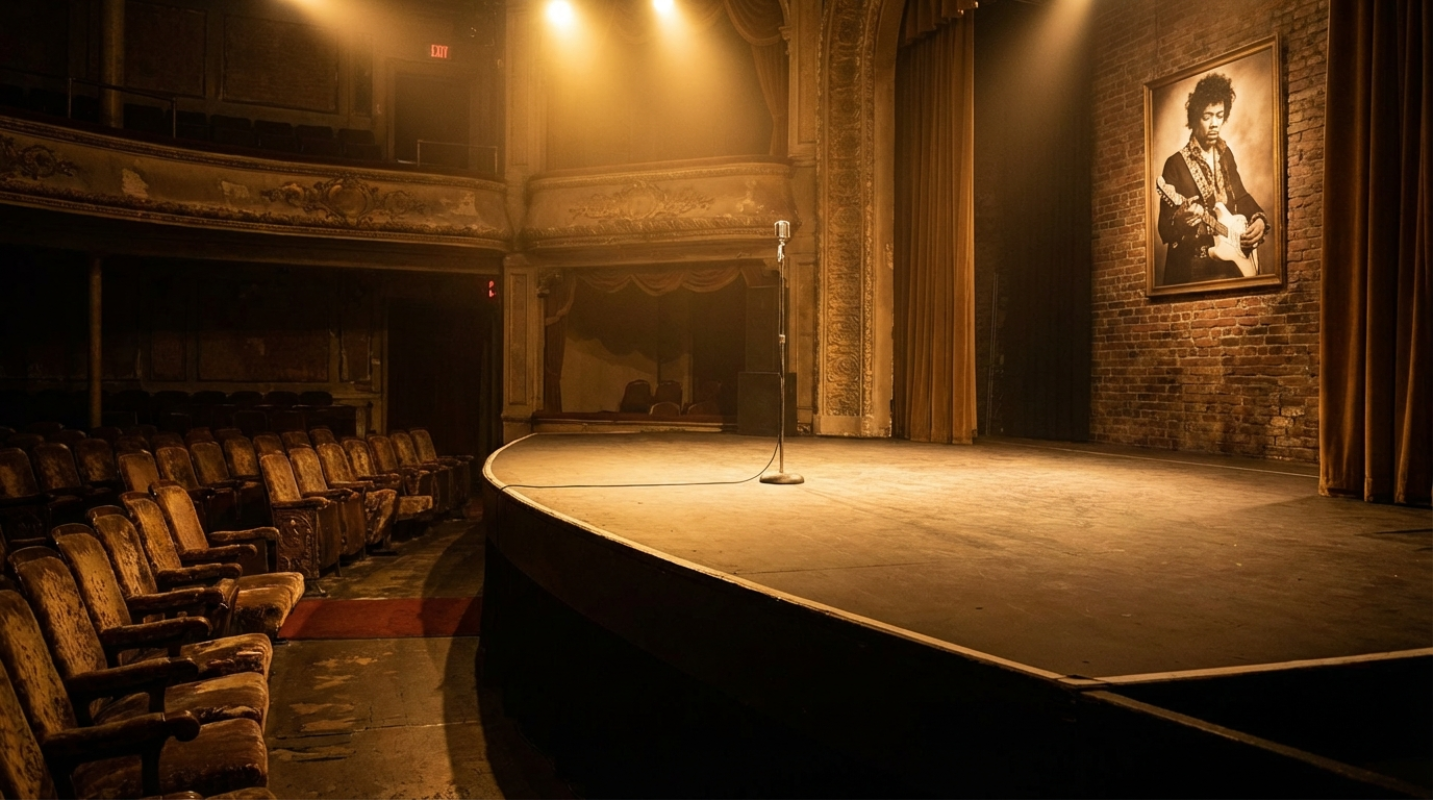
 (Image source: Gemini)
 Have you ever walked into a room and felt the air change? It is that specific shiver you get when you realize you are standing on the exact floorboards where Elvis Presley once stood. Or maybe it is the smell of old wood and stale beer at a jazz club that has been open since the 1930s.
These places are more than just buildings with stages. They are the spots where the world actually shifted. For the modern traveler, visiting an iconic music venue is not just about seeing a show. It is about catching a ghost of the energy that created the songs you have listened to your whole life.
Think of it like a time machine that still has a working bar. You can go to a museum to see a guitar behind glass, but you go to a historic venue to hear what that guitar was meant to do. This guide is about the rooms that still have that magic.
We are looking at the places that defined genres and the performers who made them famous. From the humid studios of Memphis to the foggy streets of San Francisco, these are the needed stops for anyone who believes music is a form of travel.
The Birthplace of the Blues and Rock Southern Icons
Nashville is having a massive moment right now. The city saw over 24 million visitors recently, and most of them are looking for the heart of country music.¹ You will find it at the Ryman Auditorium. They call it the Mother Church for a reason.
In 2025, the Ryman became the first venue ever inducted into the Pollstar Live Hall of Fame.² It is a big deal because it recognizes that the building itself is a performer. Bobby Weir from the Grateful Dead recently said that you do not just play the Ryman, you step into its story.
If you visit in 2026, you have to check out the reimagined backstage tour. It is full of artifacts from people like Dolly Parton and Kacey Musgraves. It is hallowed ground, but it still feels alive because the acoustics are still some of the best in the world.
Then you have Memphis. Sun Studio celebrated its 75th anniversary in 2025. It is a tiny room, but TripAdvisor recently ranked it as the third best tourist attraction in the entire country.³ That is wild when you consider it is just a small storefront.
The best part about Sun Studio is that it is still a working recording space. After the tourists leave at 6:00 PM, bands can rent the room for about 200 dollars an hour. You can record your own songs on the same floor where the Million Dollar Quartet once jammed.
New York City The Epicenter of Artistic Revolution
New York City does not do nostalgia the same way the South does. In NYC, if a venue is not making money, it becomes a bank or a pharmacy. That is why the places that have survived in Greenwich Village are so special.
The Village Vanguard is the gold standard for jazz. It is a basement room with a weird shape, but it has hosted everyone from Miles Davis to John Coltrane. It does not feel like a tourist trap because the rules are still the same. You sit down, you stay quiet, and you listen to the music.
A few blocks away is Cafe Wha?, which is where a young Bob Dylan first got on stage. It is loud and cramped and exactly what you want from a basement club. It still feels authentic because it has not been cleaned up too much for the tourists.
Up in Harlem, the Apollo Theater is still the place where stars are born. The Amateur Night is still running, and the audience is still the toughest in the world. It is a venue that has managed to keep its edge for decades.
If you are planning a trip to New York in 2026, these are the spots that offer a real connection to the past. They are not museums. They are active rooms where the next big thing might be playing tonight.
California Dreamin West Coast Venues That Defined Eras
The West Coast music scene has always been about the counterculture. In Los Angeles, the Whisky a Go Go on the Sunset Strip is where the Doors were the house band. It is a neon-soaked piece of history that still hosts rock shows every single night.
San Francisco has the Fillmore Auditorium, which is a completely different vibe. This was the home of the psychedelic movement in the 1960s. The venue is famous for its tradition of giving out free apples and custom posters to every fan who walks through the door.
The Fillmore is a great example of how to keep history relevant. In late 2025, they started a new campaign with retro sticker machines and flash tattoo events to celebrate their visual art legacy. It keeps the younger crowd coming in while respecting the older fans.
Green Day played a secret show at the Fillmore recently that people are still talking about. Even for a band that plays stadiums, the intimacy of the Fillmore is something they crave. Johnny Marr said it feels like being transported back to the roots of rock.
When you visit, make sure to go upstairs to the Poster Room. It is a gallery of every show that has happened there since the 60s. It is a visual history of how music changed from folk to acid rock to punk.
Beyond the US Global Landmarks of Musical Heritage
If you want to see where the American sound went to get reinvented, you have to go to Liverpool. The Cavern Club is the obvious choice. Although the original room was filled in years ago, the current club is built on the same spot using the original bricks.
It is a brick vault that feels like a bunker. When you hear a band playing Beatles covers there, it does not feel cheesy. It feels like you are at the source. It is a reminder of how music travels across oceans and changes the world.
Other global stops like La Scala in Milan offer a different kind of history. It is about the grandeur of opera and the performers who were the rock stars of the 18th century. These international venues give you a broader perspective on what "iconic" really means.
Integrating these stops into a trip requires some planning. Many of these European venues have very strict dress codes or booking windows. But the effort is worth it to see how different cultures preserve their musical souls.
Top Recommendations for Your Music Pilgrimage
If you only have time for a few stops, these are the ones that offer the most bang for your buck in 2026. They balance historical significance with a great visitor experience.
- The Ryman Auditorium (Nashville) - Get the VIP tour if you can. It gives you access to the dressing rooms and the stage, which is a feeling you will not forget.
- Sun Studio (Memphis) - Buy your tickets the moment they open. They sell out by midday during the summer months and do not take online reservations for the basic tour.
- The Fillmore (San Francisco) - Check the concert calendar and go for a show rather than just a tour. The energy of the crowd is part of the historical experience.
Planning Your Pilgrimage to Music History
So what does this actually mean for your next vacation? It means you should stop looking at your phone and start looking for the stages that shaped your playlist. These venues are the physical proof that music matters.
When you visit these spots in 2026, remember to respect the history. These are not just bars or theaters. They are shrines to the people who had the guts to try something new. But do not be too precious about it either. These rooms were built for noise.
The best way to experience a historic venue is to buy a ticket for a show. Tours are great for the facts, but a live performance is how you feel the spirit of the place. Whether it is a jazz trio in New York or a country star in Nashville, the music is what keeps these buildings alive.
Go find a show, grab a drink, and stand in the spot where a legend once stood. You might just feel the air change.
Sources:
1. Visit Music City - Nashville Visitor Data 2025
2. Pollstar - Ryman Auditorium Hall of Fame Induction
3. Sun Studio Official Site - Visitor Information and History
.png)
.png)