 (Image source: Gemini)
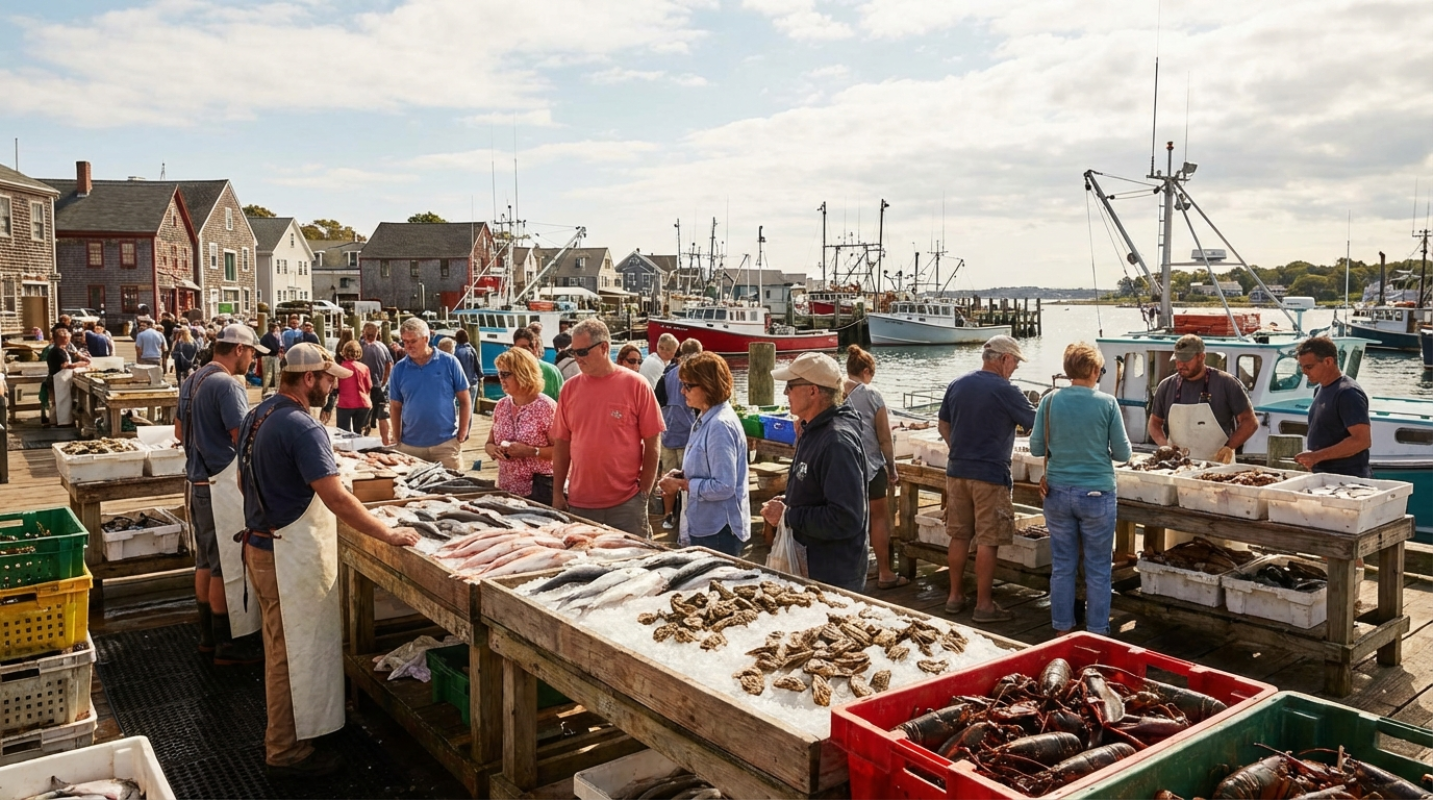
 The ideal experience of buying seafood can feel like a pilgrimage with the briny scent of the sea, the rhythmic crunch of ice underfoot, the sight of fish eyes clear as glass, and the sound of a fishmonger loudly detailing the morning’s catch. This is the sensory experience that separates truly fresh seafood from the bland, vacuum-sealed offerings you find under fluorescent lights.
You want the good stuff. You crave the connection to the source. In 2026, the best seafood isn't just about what was caught; it's about who caught it and how. The towns that truly excel at this are the ones that have turned their docks into dynamic, transparent marketplaces. They offer an unparalleled, authentic seafood market experience that connects you directly to the ocean’s bounty.
If you’re planning a trip around flavor, forget the fancy restaurants for a minute. Your first stop must be the market. That’s where the culinary heart of any self-respecting coastal community beats.
What Makes a Seafood Market Truly Great?
If a market smells "fishy," you’re likely in the wrong place. The scent of a high-quality market should be clean, cold, and saline, like a sea breeze. But defining greatness goes far beyond the smell test.
The best markets operate on principles of immediate transfer and absolute transparency. They rely on daily catches, rigorous ice management, and, most importantly, direct-from-boat sourcing. When we talk about "fresh," we mean fish that were swimming less than 24 hours ago.
This focus on quality isn't just about taste; it’s now heavily influenced by global economics and ethics. North America holds the largest share of the global sustainable seafood market, reflecting a strong consumer demand for eco-certified products.¹ The market value is projected at over $5.67 billion in 2026, showing exactly where consumer priorities lie.¹
What should you look for beyond the main catches? Truly great markets offer a complete ecosystem of flavors and knowledge.
- Traceability: Can the fishmonger tell you the name of the boat, the location of the catch, and the method used? If they can’t, move on.
- Expert Guidance: Does the staff offer preparation advice, or recommend a wine pairing? A good fishmonger is a culinary coach.
- Ancillary Offerings: Look for local artisanal salts, regional hot sauces, specialized oyster shuckers, and hyper-local shellfish that wouldn’t travel well.
The markets that thrive are those that adhere to strict standards, often guided by organizations like the Monterey Bay Aquarium Seafood Watch (MBASW) program, which uses science-based recommendations to guide consumers toward "Best Choices" and "Good Alternatives."² This focus on sustainability protects the oceans but also supports local economies and the small-boat fishers who are the backbone of these towns.
The East Coast Icons, Tradition and Terroir
The East Coast, particularly the Northeast and the Carolinas, is defined by deep, multi-generational fishing traditions. Here, the markets often feel less like retail spaces and more like living museums.
Swansboro, North Carolina
Down in North Carolina, the experience is less about high-tech traceability and more about sheer longevity and local loyalty. Take Clyde Phillips Seafood Market in Swansboro, an iconic mainstay on the White Oak River that has been operating since 1954.³ This is the traditional "fish house" model. You’ll find local catches like grouper, snapper, and shrimp, often sold by the very families who brought them in. The market atmosphere is humid, busy, and entirely authentic. It’s a snapshot of coastal life preserved in amber.
Boston, Massachusetts
Boston’s historic Fish Pier provides a fascinating contrast. Although the history is palpable, the city has become a hub for innovative sourcing. Companies like Red's Best aggregate catches from hundreds of small local boats and use technology to connect consumers directly to their fishermen.¹⁰ This model promotes local livelihoods while ensuring maximum freshness and transparency. You can walk into their market, buy a piece of Cod or Haddock, and know exactly which fisherman harvested it off the coast of Maine yesterday. That’s the definition of modern freshness.
Expert Tip: When visiting an established market, ask the fishmonger, "What did the small boats bring in this morning?" This shows you’re interested in the ultra-local, specialty catch, not just the bulk items, and often earns you the best recommendation.
West Coast Wonders, Pacific Bounty, and Innovation
The West Coast seafood scene is characterized by the unique bounty of the Pacific Ocean and a progressive approach to environmental stewardship. Here, markets often manage larger, more diverse catches, from massive wild King Salmon to the coveted Dungeness Crab.
San Pedro, California
If you want scale, head to Southern California. The San Pedro Fish Market is famous for being one of the biggest seafood operations in the state, known for its massive, shareable seafood trays and pier-side dining experience.⁴ It’s a high-energy, high-volume environment where you can see hundreds of pounds of Pacific Snapper, Yellowtail, and local rockfish moving through the stalls daily. The sheer volume ensures high turnover, which is its own guarantee of freshness.
Port Orford, Oregon
Further north, the focus tightens on sustainability. In towns like Port Orford, Oregon, you find models like Port Orford Sustainable Seafood. This market operates a Community Supported Fishery (CSF) model, delivering line-caught, flash-frozen seafood directly from their small-boat fleet.⁵ This system eliminates the middleman entirely, providing unparalleled traceability. They focus heavily on species like Black Cod and Pacific Halibut, showing the quality derived from small-boat, low-impact fishing methods.
The difference between the coasts often comes down to flavor profile. East Coast staples like Cod and Flounder are typically leaner and flakier, while the Pacific offers richer, oilier fish like Salmon and Albacore Tuna, yielding a deeper, more deep flavor.
Hidden Gems and Global Flavors
Although the established hubs get the headlines, some of the most rewarding market experiences are found in smaller towns, often those specializing in a very specific niche.
Biloxi, Mississippi
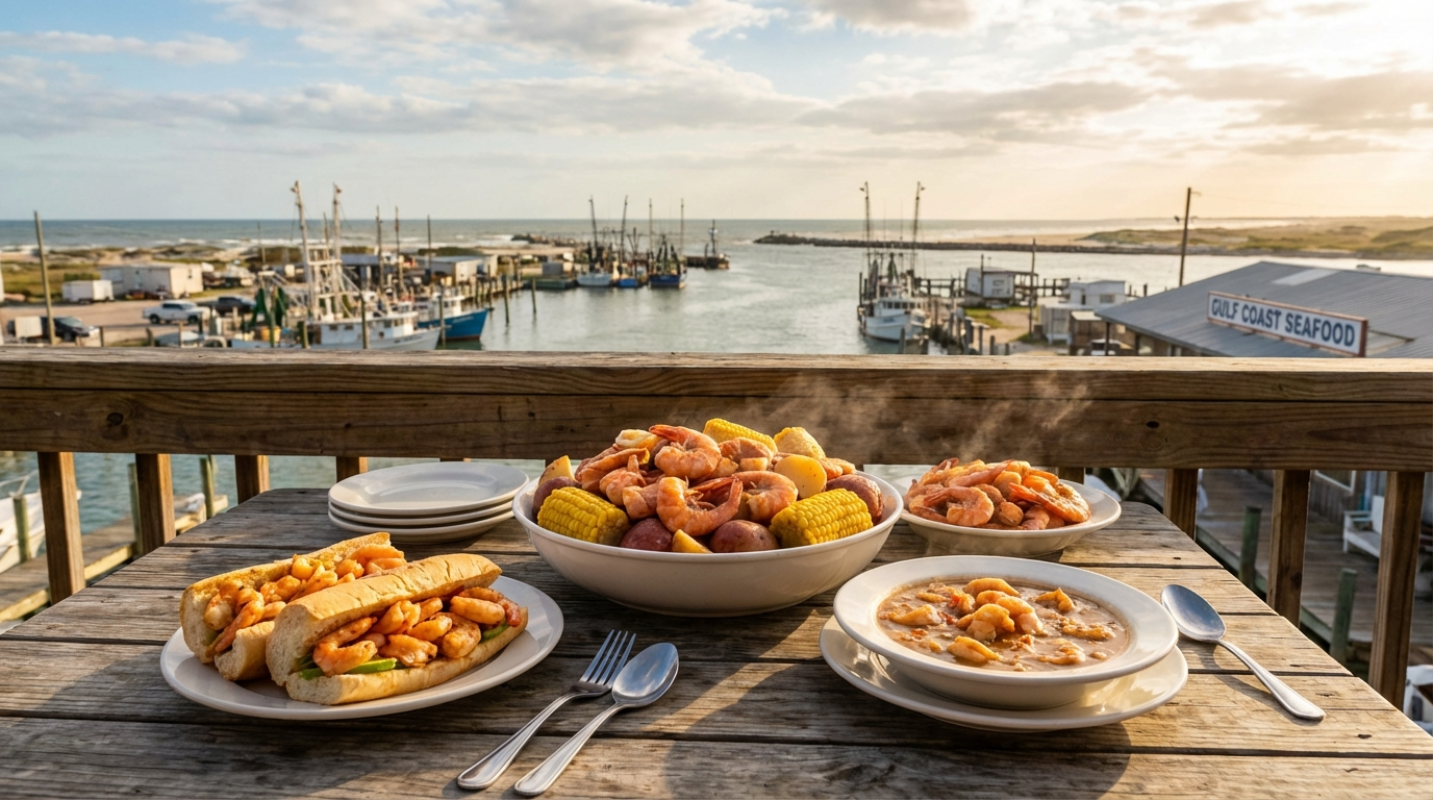
The Gulf Coast offers a distinct experience, dominated by shrimp, oysters, and specific Gulf species. Biloxi, Mississippi, hosts institutions like Desporte Seafood Market, noted as the oldest seafood market of its kind on the Mississippi Gulf Coast. Here, the seafood is caught by local fishermen and shrimpers, giving you the best access to fresh-off-the-boat Gulf shrimp, a culinary staple you simply cannot replicate with frozen alternatives. The atmosphere is laid-back, focusing on simple preparation and unparalleled freshness.
Top Recommendations for Market Explorers
When you visit a new coastal town, the market should be your first point of reference. Finding the best involves prioritizing the source.
- For Historic Authenticity, Visit Clyde Phillips Seafood Market (Swansboro, NC). It’s about old-school tradition and community ties.
- For Sustainable Transparency, Seek out Port Orford Sustainable Seafood (Port Orford, OR). This market demonstrates the best of the CSF model and traceability.
- For High-Volume Freshness, Check out Red's Best on the Boston Fish Pier (Boston, MA). They offer an incredible variety with a guarantee of local sourcing.
- For Unique Shellfish, Explore Gulf Coast markets like Desporte Seafood (Biloxi, MS) for fresh-shucked oysters and local shrimp.
If you’re an adventurous traveler, how do you approach an unfamiliar market? Start by observing the standards. Are the fish resting on thick beds of ice? Are the cutting surfaces clean? If they are selling non-local catches (like Chilean Sea Bass in Maine), ask about the certification. The Marine Stewardship Council (MSC) certification is the dominant standard globally, holding a significant market share, and is a good sign that the market prioritizes responsible sourcing.² If a market holds itself to high standards for local catches, it usually applies the same rigor to imported goods.
Casting Your Line for the Perfect Seafood Experience
The joy of seafood lies in its immediacy. It is a product defined by time and geography. When you buy direct from a coastal market, you are participating in a tradition that is thousands of years old, while simultaneously supporting a modern focus on sustainable practices.
The market is the true heart of coastal culinary culture. It’s where flavor, tradition, and community intersect. Don’t settle for the supermarket alternative, where the fish may have traveled hundreds of miles and spent days waiting. When you prioritize direct sourcing, you guarantee yourself a meal that is not just healthier and more flavorful, but also ethically sound.
So, next time you plan a coastal getaway, make sure your itinerary is built around the docks. Go early, talk to the experts, and taste the difference that only true, boat-to-table freshness can deliver. What’s your favorite discovery? It’s time to share the secrets of your best market finds.
Sources:
1. Credence Research - Sustainable Seafood Market
2. Monterey Bay Aquarium Seafood Watch
3. Our State - A Fish House Tradition in Swansboro
4. YouTube - San Pedro Fish Market
5. Port Orford Sustainable Seafood
6. Red's Best