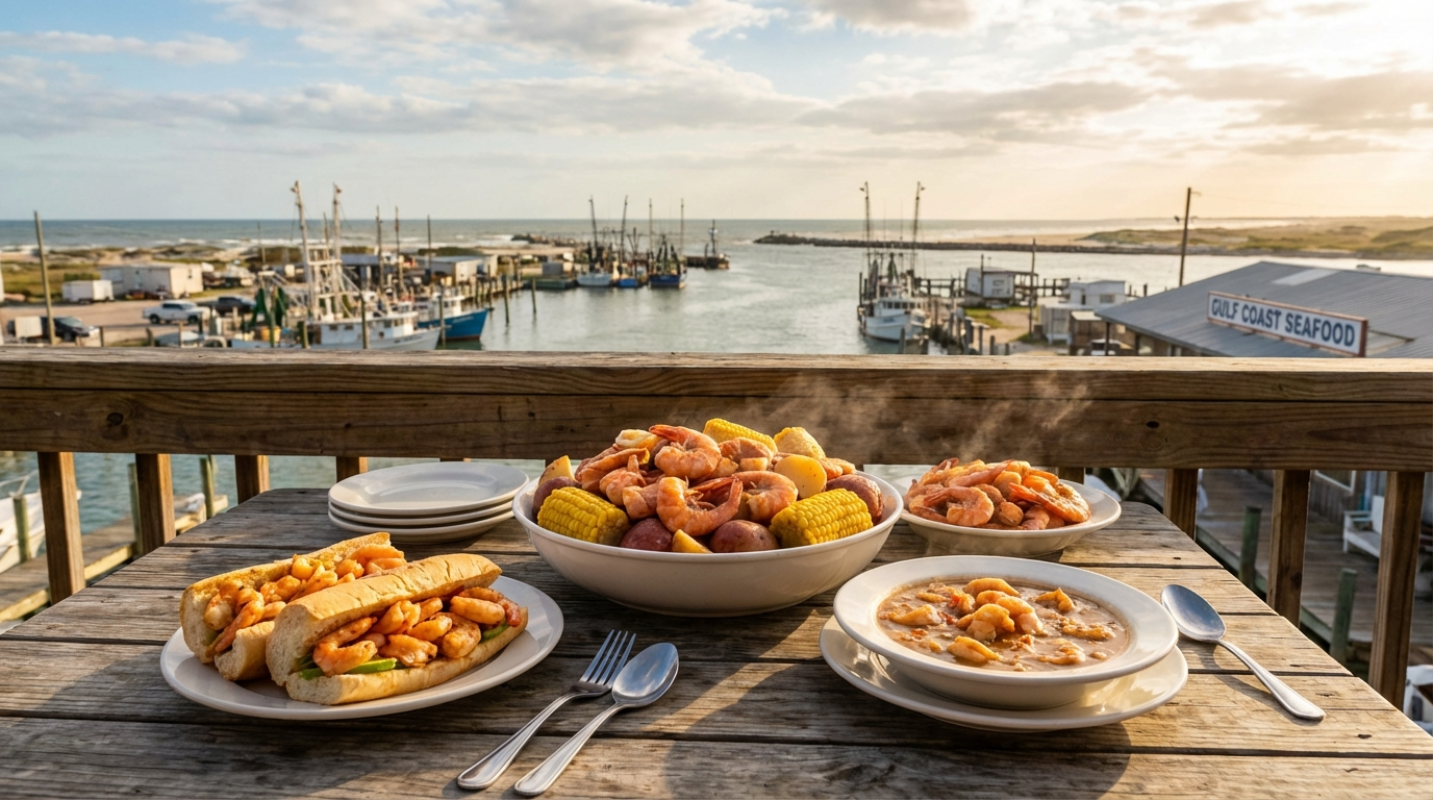
 (Image source: Gemini)
 If you’ve ever bitten into a perfectly cooked, plump, wild-caught shrimp, you know the difference. It’s a textural experience and a burst of sweet, briny flavor that farm-raised alternatives simply can’t replicate. The Gulf of Mexico isn’t just a body of water; it’s the undisputed seafood pantry of the United States. And for generations, the star of that pantry has been the shrimp.
The Gulf Coast has perfected the art of catching and cooking these crustaceans. This isn’t just about quantity, though the industry is massive (in 2023, U.S. landings of brown shrimp totaled 63 million pounds)²; it’s about heritage, local spices, and the unique preparations that define each coastal mile.
We’re setting off on a culinary road trip, a savory journey from the barbecue pits of Texas to the citrus-laced plates of the Florida Keys. Prepare your appetite, because we’re exploring the regions whose signature shrimp dishes don’t just feed you, they tell a story.
The Bold Flavors of Galveston and Brownsville
When you hit the Texas coast, you’re in the domain of the Gulf Brown Shrimp. These guys are known for their firm texture and strong, almost earthy sweetness. They thrive in the brackish waters near the shore, making them the primary target for the massive fleets operating out of ports like Brownsville and Galveston.
Texas cooking demands bold flavor, and its shrimp preparations are no exception. Although you’ll find excellent fried shrimp everywhere, the true Texan genius lies in incorporating that smoky, spicy border influence. Think Tex-Mex fusion where Gulf sweetness meets fire.
One of the best ways to enjoy the local catch is the simple, direct preparation: grilled. Texans usually choose a straightforward marinade of olive oil, lemon juice, garlic, and herbs like oregano and red pepper flakes⁴. Cooked quickly over high heat, the char improves the shrimp’s natural sweetness, often served alongside rice or orzo.
But for a true coastal treat, you must seek out Campechana, the Mexican-style shrimp cocktail. It's not just shrimp floating in ketchup; it’s a layered dish featuring large pieces of Gulf shrimp swimming in a savory, spicy, and slightly sweet sauce of tomato, onion, avocado, cilantro, and lime. It’s the perfect blend of coastal freshness and inland spice, a truly iconic Texas appetizer.
New Orleans and Beyond
If Texas provides the spice, Louisiana provides the soul. The Bayou State is the undisputed epicenter of Gulf seafood culture, where shrimp is not merely a meal component but a foundation for entire culinary traditions. Here, the flavors are deep, rich, and unforgettable, built upon the Holy Trinity of Creole and Cajun cooking: onions, celery, and bell peppers.
You can’t talk about Louisiana shrimp without talking about NOLA BBQ Shrimp. Forget what you think you know about barbecue sauce; this dish is nothing like the sticky, sweet coating you find on ribs. New Orleans BBQ Shrimp is a decadent, unapologetically rich affair. It involves whole, usually head-on, Gulf shrimp simmered in a powerful sauce of black pepper, butter, lemon juice, Worcestershire, and hot sauce. The resulting sauce is so flavorful, it demands to be soaked up - which is why it’s traditionally served with large slabs of crusty French bread or creamy stone-ground grits.
Then there are the classics that define the state’s identity
- Shrimp Étouffée: A thick, buttery stew, simmered low and slow, featuring a blonde roux and plenty of Creole seasoning.
- Gumbo and Jambalaya: Hearty, spicy, one-pot dishes where shrimp plays a starring role alongside andouille sausage and chicken.
- Fried Shrimp Po’boys: The ultimate handheld lunch, featuring perfectly fried Gulf shrimp piled high on soft French bread, dressed simply with lettuce, tomato, and mayonnaise.
In Louisiana, they treat the shrimp right, making sure that the preparation complements the wild-caught flavor rather than covering it up. It’s a culinary masterclass in seasoning and richness.
Mississippi & Alabama
Travel eastward, and the pace slows down. The Mississippi Gulf Coast and Alabama's Gulf Shores and Dauphin Island offer a quieter, perhaps more authentic, glimpse into the life of a shrimping community. These regions prize freshness and simplicity, often serving the catch mere hours after it leaves the net.
The culinary identity here leans heavily into traditional Southern comfort food, which means one dish reigns supreme: shrimp and grits. Although every Southern state claims ownership, the Mississippi and Alabama versions are often cleaner and creamier, focusing on high-quality stone-ground grits paired with Gulf shrimp sautéed with bacon, mushrooms, and perhaps a touch of lemon-wine reduction.
But if you want to find a true hidden treasure, ask the locals about the Royal Reds. These deep-water shrimp, harvested far offshore near the Alabama/Florida line, are a delicacy. They are softer than Brown or Pink shrimp and boast an incredibly sweet, salty, lobster-like flavor. Some chefs consider them the "tastiest shrimp on the planet"³. Because they are rare and often pricier, they are usually served simply: butter-poached or steamed, allowing their natural flavor to shine without heavy seasoning.
The key takeaway for this segment of the coast? Less is often more. The flavor is in the freshness, delivered straight from the dock to your table.
Florida's Panhandle & Keys
When you cross into Florida, the culinary environment shifts again. The focus turns to the delicate Key West Pink Shrimp, often referred to as "pink gold." These shrimp, harvested primarily from the waters around the Dry Tortugas and Key West, have a sweet, clean flavor and are known for their distinctive pink hue even before cooking.
Florida’s preparations reflect its tropical and island influences. You’ll find lighter, brighter dishes that use citrus and herbs, moving away from the heavy roux-based stews of Louisiana. Think shrimp scampi, ceviche, and grilled shrimp served with zesty orange-cilantro dipping sauces.
A fun, casual tradition is the Florida Gulf Coast Newspaper Shrimp Dinner, a classic boil featuring shrimp, potatoes, corn, and sausage, improved with oranges and limes added to the boiling water. The whole steaming mess is then dumped directly onto a newspaper-covered table for communal feasting⁸.
But a serious note of caution must be sounded for anyone seeking authentic Florida Gulf shrimp. The high demand for shrimp in tourism-heavy areas has led to a significant authenticity issue. A recent study found that a staggering 96% of seafood establishments sampled in the Tampa Bay area were serving imported, farm-raised shrimp, often misleadingly implying it was locally sourced Gulf shrimp¹. This means that finding a restaurant committed to sourcing 100% wild-caught Gulf Pink Shrimp is now a premium experience, and definitely worth the effort. Always ask your server where the shrimp came from.
Planning Your Next Culinary Pilgrimage
The Gulf Coast is a singular region defined by its exceptional seafood, but its shrimp dishes demonstrate a remarkable culinary diversity. From the heavy, peppery sauces of New Orleans to the light, citrus-forward grilling of Key West, every state offers a distinct perspective on this humble crustacean.
The sheer scale of the Gulf shrimp industry, which remains sustainably managed and highly productive, means that the fresh catch is constantly available, though seasonality does influence availability and size. Brown shrimp are the giants of the Texas coast, while the Pink shrimp are the delicate, sweet treasures of Florida.
If you’re planning a trip, don’t just order "shrimp." Specify the regional dish. Ask for the NOLA BBQ shrimp, the Texas grilled shrimp, or the Royal Reds. You owe it to yourself to taste the difference that wild-caught quality makes.
Top Recommendations
- The Must-Try Dish, New Orleans BBQ Shrimp. It’s messy, buttery, and utterly incomparable.
- The Authentic Texas Experience, Grilled Gulf Brown Shrimp, simply seasoned, showing the inherent sweetness of the wild catch.
- The Premium Indulgence, Royal Reds, found primarily along the Alabama/Florida deep coast. Their lobster-like flavor justifies the higher price tag.
Sources:
.png)