 (Image source: Gemini)
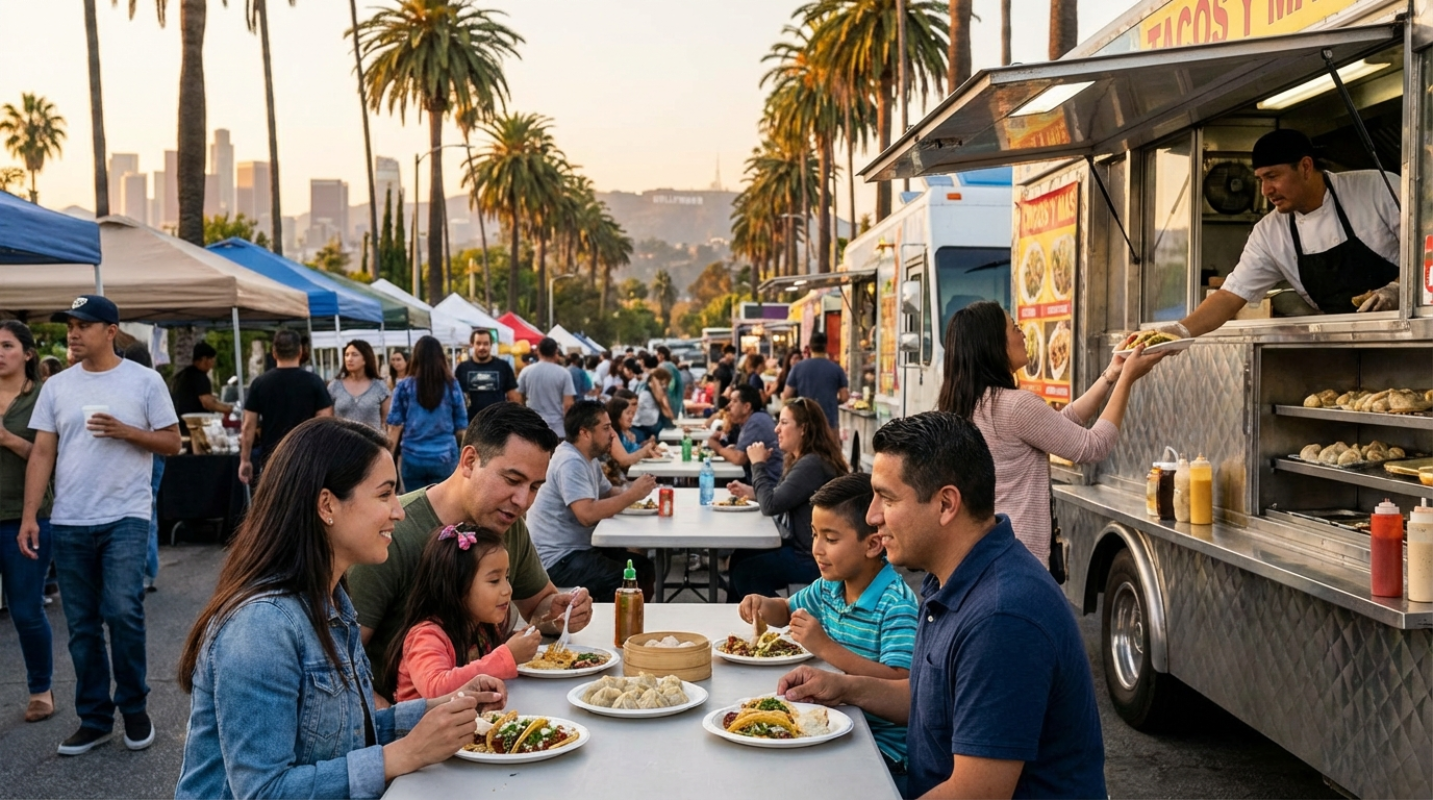
 If you want to understand Los Angeles, don’t look at the Hollywood sign or the beaches. Look at what’s on your plate. L.A. isn’t just a city with great food; it’s a global culinary capital whose identity is entirely defined by the people who moved here, bringing their grandmothers’ recipes and their street-food hustle.
We often talk about L.A. as a melting pot, but that’s too passive a metaphor. It’s more like a constantly churning, intensely active kitchen, fueled by the energy of immigrant communities. Migration isn’t just a historical footnote here; it’s the foundational, dynamic force that shapes what we eat for breakfast, lunch, and dinner.
Think about your last week of eating. Did you grab a pupusa, a spicy Korean stew, or a Banh Mi? That diversity isn’t accidental. It’s the direct result of diasporas establishing roots, creating enclaves, and slowly, deliciously, pushing their traditions into the mainstream. This article isn’t just a tour of ethnic neighborhoods; it’s an examination of how these communities have become the engine of L.A.’s culinary economy, driving innovation, defining trends, and sometimes facing the harsh realities of success and displacement.
East and Southeast Asian Influences
Los Angeles County holds some of the largest and most influential Asian communities in the Western Hemisphere, and their impact on our dining habits is impossible to overstate. They didn’t just introduce new dishes; they introduced new ways of eating, from communal grilling to late-night street snacks.
Take Koreatown (K-Town). It’s evolved dramatically from a traditional enclave focused solely on barbecue and soon dubu. Today, K-Town is an incubator for high-concept, future-minded cooking. This culinary elevation is clear in the important recognition of restaurants like Baroo, which was named the L.A. Times' 2024 Restaurant of the Year for its boundary-pushing approach to Korean dining¹. This is high art, rooted deeply in tradition but completely unafraid to innovate.
But innovation doesn't always mean white tablecloths. Often, it means fusion. The successful blending of Korean flavors with other local cuisines, perhaps most famously pioneered by the Korean-Mexican Kogi Truck, has become a core part of L.A.’s identity. You see this mainstream success in places like Broken Mouth | Lee's Homestyle, a Hawaiian-Korean café that recently ranked highly on national lists, proving that third-culture cuisine is highly marketable.
Similarly, the Vietnamese diaspora has deeply influenced the accessible, fast-casual sector. Vietnamese immigrants established Little Saigon in Orange County, but their flavors have spread across the entire region. Pho became a staple, and the Banh Mi sandwich became a lunchtime legend, perfectly embodying the immigrant ability to adapt and conquer. Looking ahead, industry analysts confirm that Vietnamese flavors continue to be an engine of creativity, with the National Restaurant Association’s 2025 Culinary Forecast predicting it as a top trend, cementing its place far beyond its traditional roots. Even high-end establishments, like Crustacean Beverly Hills, are testing the waters with concepts focused on a soulful reimagining of traditional Vietnamese street food, showing a desire to connect with the cuisine’s authentic, everyday origins.
Latin American Legacies
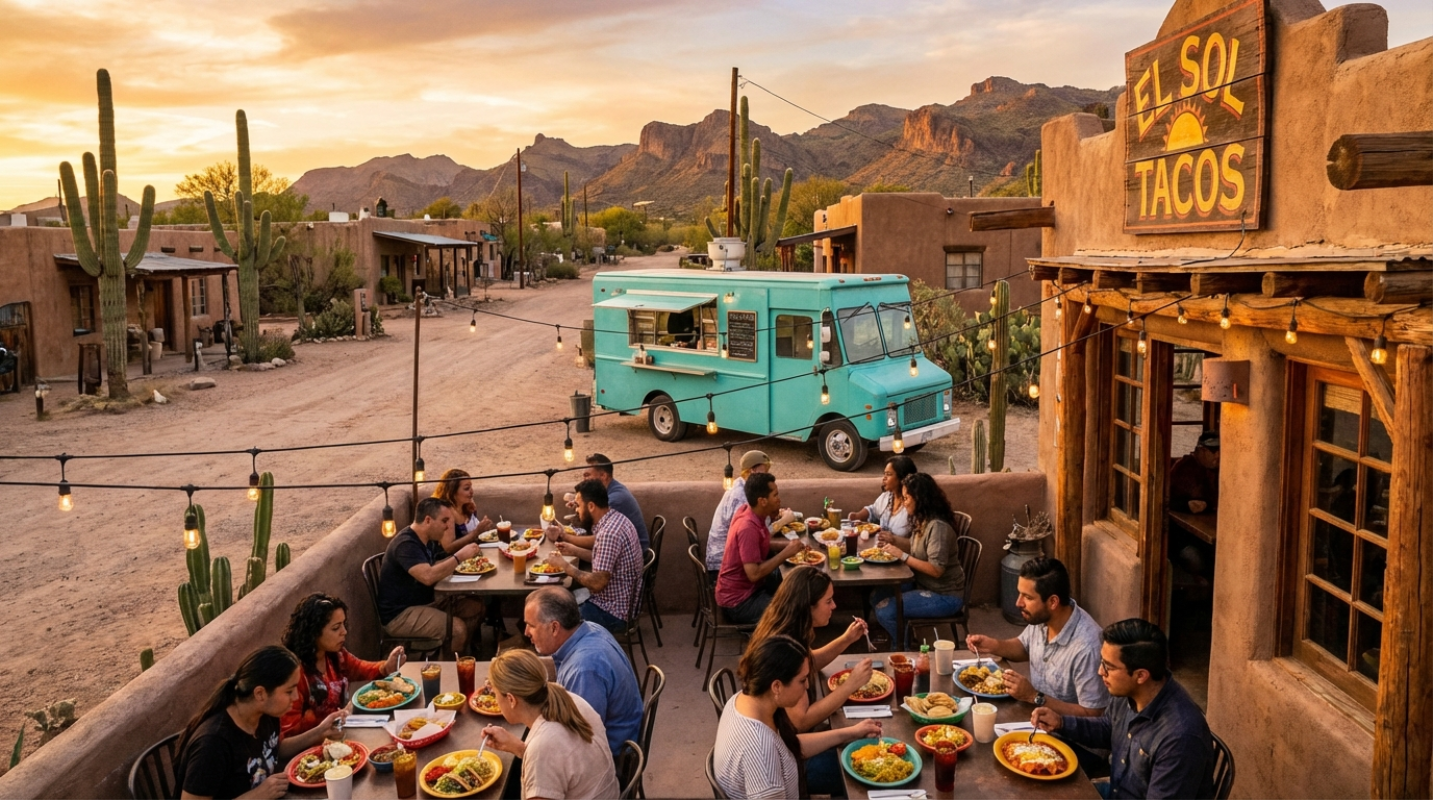
If L.A. has a culinary soul, it’s Mexican. The centrality of Mexican cuisine isn't just about volume; it’s about depth and regional specificity. Thanks to generations of immigrants from Jalisco, Oaxaca, Puebla, and beyond, you can find hyper-regional styles that rival the best food found south of the border. We aren't just eating "tacos"; we are eating tacos de canasta, tlayudas, and goat birria.
The influence of these communities is so foundational that the city is now actively working to preserve their legacy. The original King Taco location in Cypress Park is being considered for historic-cultural monument status as of early 2026, recognizing its role in establishing the modern L.A. taco sensibility and supporting Latino immigrant entrepreneurship². That’s how deep the roots go; the street food of yesterday is the cultural heritage of today.
But L.A.'s Latin American identity extends far beyond Mexico. Central American communities, particularly Salvadoran immigrants, have carved out culinary territory with defining dishes like the pupusa. These thick, stuffed corn tortillas are more than just a cheap meal; they are anchors for communities in places like Pico-Union and Westlake. They represent the successful establishment of a distinct cuisine that is now widely embraced across the city.
This culinary migration pattern is dynamic. As specific regional Mexican dishes gain traction in different L.A. neighborhoods, we see continued innovation. But this success often brings challenges. The elevation of working-class Mexican loncheras (food trucks) into higher-priced, trendier formats is explicitly cited as an example of culinary gentrification. It’s a complex relationship: we celebrate the flavor, but the economic success often doesn't benefit the original creators.
Mediterranean and Middle Eastern Crossroads
L.A.’s flavor profile wouldn't be complete without the deep, complex influence of its Mediterranean and Middle Eastern communities. Groups like the Armenians, Lebanese, and Iranians have introduced incredible spice blends and cooking techniques but have also fundamentally shaped L.A.’s fast-casual dining environment, often defining what we consider "healthy" and "sophisticated" comfort food.
Think about the ubiquity of high-quality shawarma, falafel, and kebab shops. These aren't just niche ethnic spots; they are cornerstones of the L.A. diet. The Iranian community, centered largely in Tehrangeles (Westwood), brought with it sophisticated rice dishes (polo) and precise preparation techniques that elevated Persian cuisine beyond the simple kebab.
This demographic has also played a key role in shaping the artisanal movement in L.A. They brought the traditions of high-quality flatbreads, strong coffee culture, and the use of fresh herbs and yogurt, which blend seamlessly with Californian ingredient-focused cooking.
What’s truly exciting is the work of second-generation chefs who are taking these traditions and pushing them into new spaces. They might use traditional Armenian spices in a dish featuring local, seasonal produce, or blend Lebanese marinades with modern cooking techniques. This is where the magic happens: the flavors are deeply familiar, yet the presentation and execution feel entirely new. It’s a perfect example of heritage informing innovation without sacrificing authenticity.
Innovation and Gentrification
The story of L.A.’s immigrant food scene is exhilarating, but it’s important to acknowledge the difficult reality lurking beneath the surface: the success of immigrant food is constantly threatened by the very economic forces it creates.
When an immigrant-driven food concept becomes "trendy," it often attracts new investment and higher rents, leading to gentrification. This creates a painful irony: the community that created the demand can no longer afford to operate there. We see this displacement pressure acutely affecting long-standing family businesses. In Boyle Heights, a proposed housing development threatened the eviction of the owners of the Mexican restaurant El Apetito from their home next door to their business, a stark reminder of how development impacts the stability of immigrant lives and livelihoods⁴.
This tension is visible in the rise of highly successful fusion concepts, often called "Cali-Mex" or "Asian-fusion." Although these concepts celebrate adaptation and innovation, they also run the risk of cultural dilution or appropriation. When a working-class dish is elevated and priced out of the reach of the community that created it, the line between celebration and exploitation becomes dangerously thin.
And the pressure is only mounting. A recent industry survey revealed that 84.8% of L.A. restaurants reported that business decreased in 2025, citing high costs and economic uncertainty. This disproportionately affects small, immigrant-owned businesses that often operate on razor-thin margins.
To counter this, community efforts and food advocacy groups are fighting hard to preserve authentic, small-scale immigrant establishments. They argue that preserving these places isn't just about saving a restaurant; it’s about preserving cultural heritage and economic opportunity for the families who built the city’s identity.
The Next L.A. Palate
Los Angeles is defined by its restlessness. It’s a city that never settles on a single identity, and its food reflects that constant motion. The foundational culinary contributions of Korean, Mexican, and Vietnamese immigrants have set the stage, proving that authenticity and innovation are not mutually exclusive.
So, what does the future of the L.A. palate look like? It will continue to be shaped by the newest waves of migration. We are already seeing increased visibility and recognition for Filipino, Ethiopian, and Indonesian cuisines, driven by chefs who are ready to share their regional specialties with a broader audience. These emerging communities are taking the successful playbook written by their predecessors: start small, stay authentic, and adapt boldly.
The history of L.A. food is a blueprint for global gastronomy. It tells a story where the most marginalized communities become the most influential, where humble street food becomes the subject of serious, important debate, and where the act of sharing a meal is an act of cultural exchange. L.A. won't ever be known for one single dish or one single style. It will forever be known for its stunning, complex, and changing mosaic of immigrant flavors. That’s the real L.A. story, and it’s one you can taste every single day.
Sources:
1. L.A. Times’ 2024 Restaurant of the Year: Baroo
2. King Taco location considered for historic-cultural monument status