 (Image source: Gemini)
 If you close your eyes and picture an industrial city, you probably see black-and-white images: towering smoke stacks, the rhythmic clang of machinery, and the grit of relentless labor. These places, born from the furnace of the industrial revolution, defined the 20th century. But when the factories closed and the jobs moved overseas, many were left behind, struggling with decay and a loss of identity.
But something interesting happened on the way to obsolescence. These former manufacturing capitals didn't crumble; they got smart. Today, the world’s most exciting urban travel destinations aren't always sun-drenched coastal resorts. They are the gritty, historical, and deeply authentic cities that figured out how to turn discarded factories into cultural gold.
If you’re planning your next trip, chances are your itinerary includes exploring a former mill converted into a hotel or drinking craft beer in a repurposed power station. The industrial city has completed its unlikely comeback.
Why Industrial Cities Are Trending Now
For the modern traveler, the polished perfection of a newly built resort town feels sterile. You’re looking for a story, a sense of place, and a little bit of historical friction. That’s exactly what post-industrial cities deliver.
The stigma of the "rust belt" is dissolving, replaced by a fascination with resilience and urban history. When heavy industry collapsed, these places faced an existential crisis. This forced innovation in urban planning and culture, leading to a unique aesthetic that tourists now actively seek out.
Think about what makes a destination authentic. It’s the local character, the distinctive architecture, and the sense that the city has earned its modern vibrancy. The industrial past provides the historical depth that newer cities simply lack. Heritage preservation isn't just about saving old buildings; it’s about marketing a compelling, true narrative of survival.
The Blueprint for Reinvention - Key Pillars of Transformation
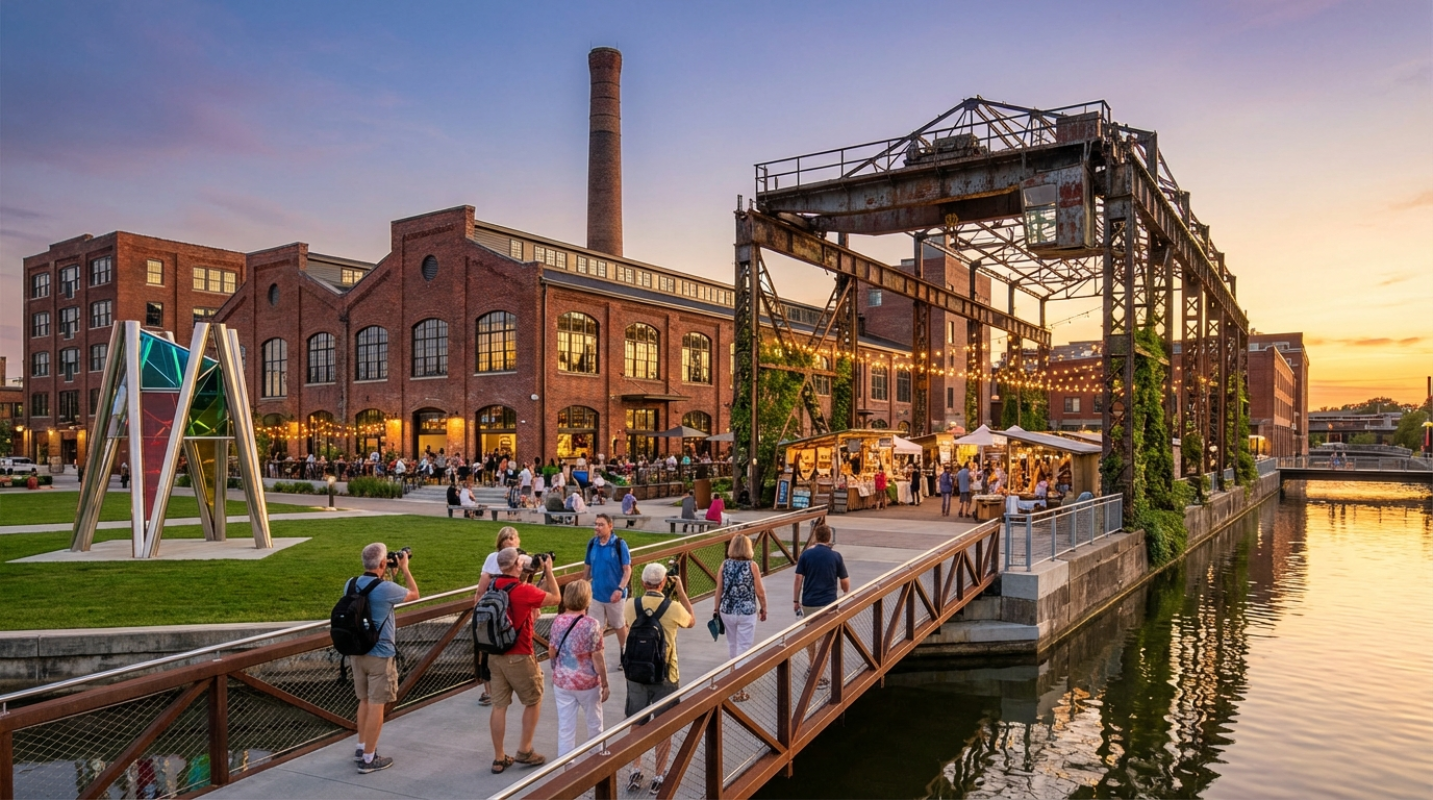
How do you turn a massive, polluting factory into a must-see landmark? The answer lies in an approach called adaptive reuse. This process, where obsolete structures are repurposed for modern functions, is the core mechanism driving industrial tourism.
Adaptive reuse is booming in 2025. The shift is from spaces of manufacture (like warehouses and shipyards) to spaces of culture, education, and community life. This isn't just an economic move; it’s a sustainable one. Studies show that reusing buildings instead of demolishing and replacing them can divert up to 90% of materials from landfills, an important environmental benefit in an era of climate urgency.
Transforming Infrastructure
The transformation isn't cheap or easy. It requires massive government and private sector teamwork, focusing on infrastructure investment. This includes cleaning up polluted waterfronts, developing expansive pedestrian-friendly zones, and installing modern transit links.
The result is the 'Experience Economy' in action. You aren't just looking at old buildings; you’re participating in them. You might attend a concert in a former steel mill, take a cooking class in an old canning facility, or wander through an art gallery housed in a giant locomotive repair shed. These unique, hands-on activities are far more appealing than standard sightseeing.
Case Study Deep Dive: Global Success Stories in Industrial Regeneration
The reinvention of industrial cities is a global phenomenon, but a few places stand out as having written the definitive playbook.
Pittsburgh, USA
Pittsburgh, once the undisputed capital of American steel production, is the quintessential example of a city that transitioned from heavy manufacturing to intellectual capital. When the mills closed, the city doubled its institutional strengths: its universities and hospitals. This "Eds and Meds" model turned the smoky city into a hub for technology, robotics, and healthcare innovation.
Today, Pittsburgh’s hillsides are dotted with tech campuses instead of blast furnaces. Its old factories along the Monongahela River have become sleek apartment blocks and retail centers, proving that a city can completely change its identity while preserving its rugged character.
Manchester, UK
If Pittsburgh is about steel, Manchester is about cotton and music. The birthplace of the Industrial Revolution, Manchester used its textile heritage to become a digital and cultural powerhouse. The old Victorian warehouses that once stored bales of cotton are now home to digital startups, creative agencies, and globally recognized music venues.
The city’s preservation efforts focus heavily on maintaining the red-brick aesthetic, providing a stylish backdrop for its modern, youth-driven cultural scene. It's a city that successfully commodified its history without sanitizing it.
Bilbao, Spain
Perhaps the most dramatic and influential transformation is Bilbao, Spain. In the 1980s, Bilbao was a struggling shipbuilding and steel city with a polluted estuary. It was a place few people visited unless they had business there.
Everything changed with the opening of the Guggenheim Museum in 1997. Designed by Frank Gehry, the museum was an architectural marvel that instantly put Bilbao on the global map. This single cultural anchor was an economic detonator. The museum is estimated to have brought €6.5 billion (£5.6 billion) to the Basque country since its opening, fundamentally shifting the city’s economic base toward tourism.
It's important to remember, though, that the museum was just the "tip of the iceberg." Bilbao’s success was underpinned by a massive, coordinated €1 billion urban regeneration program that cleaned the river and built a new metro system. The Guggenheim didn't save Bilbao; it simply gave the world a reason to look at the massive transformation already underway.
Essen, Germany
For a masterclass in how to manage industrial heritage sustainably, look to Essen, Germany. The Zollverein Coal Mine Industrial Complex, a UNESCO World Heritage Site, is a perfect example of preservation driving culture. The 100-hectare former coal mine and coking plant closed in 1986, but instead of being demolished, it was meticulously preserved and repurposed.
Today, the site includes the Ruhr Museum in the former coal washery and hosts countless cultural events. Guided tour visitors have increased almost fortyfold since the early 1990s, demonstrating the lasting appeal of thoughtfully preserved industrial history. This isn't just tourism; it’s a focus on cultural continuity.
Culture, Cuisine, and Connectivity
The success of these cities relies heavily on capturing the current design zeitgeist: industrial chic.
When you check into a boutique hotel in a repurposed factory, you’re paying a premium for the exposed ductwork, the massive steel beams, and the high ceilings. That aesthetic signals history and craftsmanship. It’s authentic, and it provides a unique backdrop for hospitality, unlike the generic drywall and drop ceilings of modern construction.
The cuisine follows suit. The farm-to-table movement finds a natural home here, often rooted in the local history of production and processing. You’ll find creative beverage movements growing, with micro-distilleries and breweries setting up shop in old mills or bottling plants, directly connecting their product to the city’s manufacturing past.
Modern travelers, particularly digital nomads and younger generations, also expect seamless connectivity. These cities, often reinventing themselves as smart city hubs, appeal directly to travelers who need high-speed internet and efficient public transit to work remotely or simply share their experiences instantly.
The Lasting Appeal of Resilience
Although the transformation of former industrial cities is a remarkable success story, it’s not without its challenges. The influx of tourists and investment often leads to rapid gentrification, pushing out the very communities whose history and character made the district appealing in the first place.
The next wave of industrial tourism must address this head-on. Sustainable development means balancing the tourist influx with preserving affordable housing and local character. The goal shouldn’t be to turn former factory districts into theme parks, but to create truly mixed-use neighborhoods where residents and visitors coexist.
###
Top Recommendations for Your Industrial Heritage Trip
- The Distillery District, Toronto: A completely pedestrianized former distillery complex featuring Victorian industrial architecture, now filled with boutiques and galleries.
- Tate Modern, London: An iconic example of adaptive reuse, transforming the massive Bankside Power Station into a world-class cultural institution.
- The Strip District, Pittsburgh: Explore the old produce terminals and warehouses, now home to tech startups, international markets, and trendy eateries.
The appeal of these cities remind us that nothing is truly obsolete, and that history, when handled with creativity and respect, is the most valuable resource a city can possess. These are places that stared down economic collapse and came out better, smarter, and infinitely more interesting. They are, quite simply, the destinations of the future.
Sources:
1. The Guggenheim effect: how the museum helped transform Bilbao
2. Zollverein Coal Mine Industrial Complex
The information provided on MyUSAI regarding travel destinations, including but not limited to routes, prices, cultural descriptions, and historical data, is for general informational and educational purposes only.