 (Image source: Gemini)
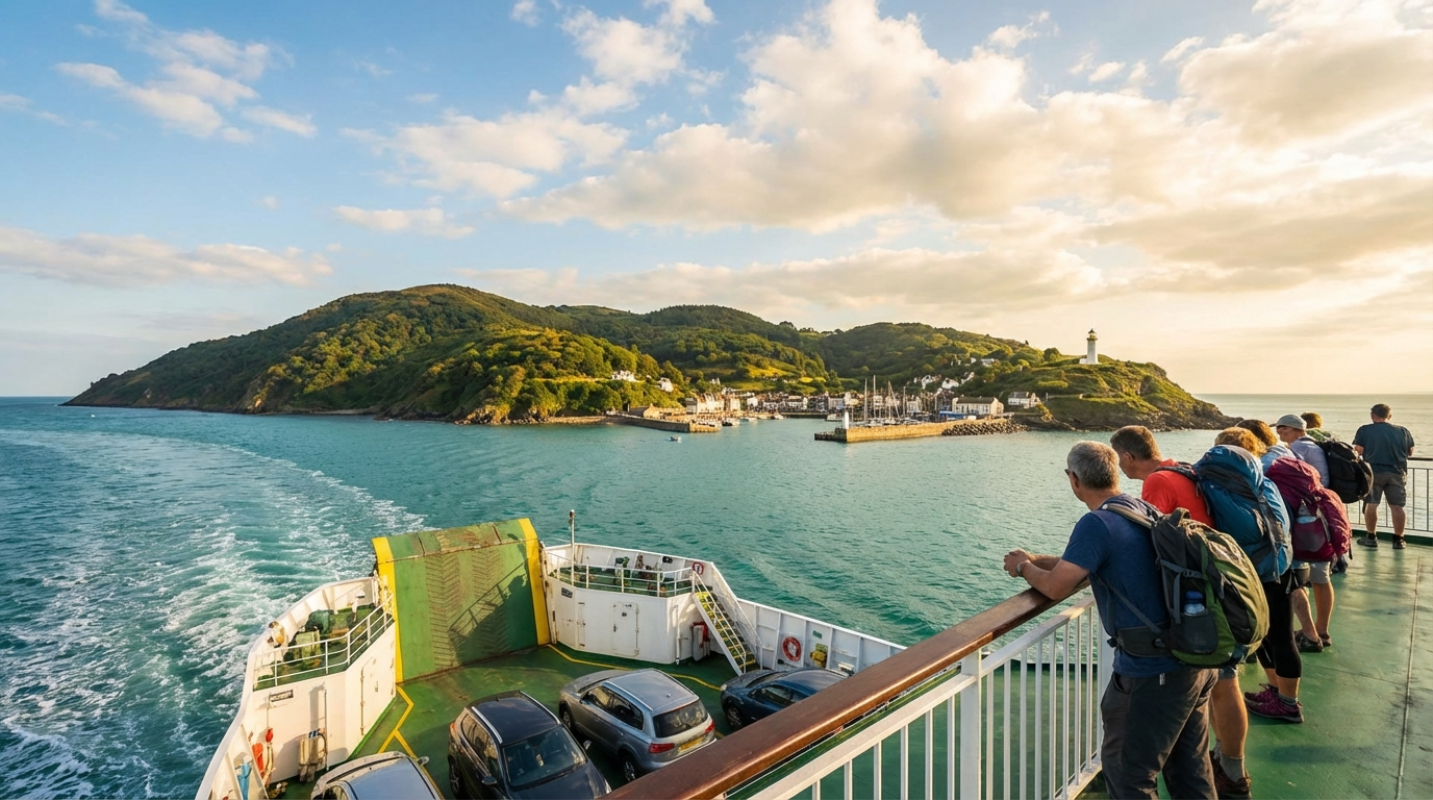
 Forget the misery of airport security lines and the cramped chaos of regional jet travel. If you’re truly looking to disconnect, the journey should feel like a vacation, not a hurdle. That’s the magic of island hopping by ferry. Modern ferry networks have quietly transformed coastal exploration, offering a unique, scenic, and often significantly less stressful alternative to flying. You drive your car onto a massive vessel, grab a coffee, and watch the mainland disappear into the horizon. It’s an immediate shift into vacation mode.
These accessible routes connect major metropolitan areas to some of the world’s most sought-after destinations, from the rugged coastlines of the Pacific Northwest to the sun-drenched archipelagos of Greece and Southeast Asia.
Ferry travel today is economical, practical, and increasingly environmentally conscious, thanks to the global push for hybrid and electric fleets. We’re going to handle the key ferry routes across the globe and show you exactly how to integrate sea travel into your next great island adventure.
North American Gems
In North America, ferry systems are pieces of infrastructure, needed lifelines connecting remote communities to the mainland. Although these systems are undergoing massive modernization efforts, reliability remains a hot topic, especially in peak seasons.
Pacific Coast Lifelines
The Pacific Northwest relies heavily on its vast water transport networks. Consider the Washington State Ferries (WSF) system, the largest in the US. Getting to the San Juan Islands or across Puget Sound is impossible without them.
So what does this actually mean for travelers? It means you must plan ahead, especially as the system struggles with crew shortages and aging vessels. In Fiscal Year 2024, WSF missed its reliability goal, completing only 97.6% of planned trips⁴. That small percentage difference translates directly into frustrating cancellations and delays for thousands of travelers.
The good news is that a massive investment is underway. WSF is procuring five new hybrid-electric ferries, with the first two scheduled for delivery by 2028¹. This shift promises to stabilize service and significantly reduce emissions in the coming years.
East Coast Challenges and Charms
On the opposite coast, the romance of Martha’s Vineyard and Nantucket is often accessed via the Steamship Authority (SSA). Like the PNW, the SSA faced a serious reliability crisis recently, recording a staggering 1,628 cancellations in the first 11 months of 2024 alone, primarily due to chronic crew shortages.
If you’re planning a trip to these quintessential New England islands, or perhaps hopping over to Nova Scotia’s coastal islands, you must treat your ferry booking with the same seriousness you’d give a transatlantic flight. Vehicle space sells out months in advance, and you should always build a buffer day into your itinerary, especially during the busy summer of 2026.
European Cruising
Europe’s ferry networks are arguably the most advanced and integrated in the world. They aren't merely transport; they are often mini-cruise experiences, especially on overnight routes. The scale of this operation is immense: passenger crossings around the British Isles and Europe reached 23.5 million in 2024³.
The Mediterranean Hubs
If you’ve dreamed of island hopping in Greece, Italy, or Croatia, the ferry is the default mode of travel. Major operators like Blue Star Ferries in Greece connect dozens of islands, offering services that range from high-speed catamarans to massive conventional vessels.
Here’s a tip from experienced travelers: while the high-speed ferries are fast, the large conventional ferries are widely considered the most reliable, particularly when the legendary Aegean winds kick up. They are less prone to weather-related cancellations, allowing you to stick to your carefully planned itinerary. On routes like Piraeus to Crete or Ancona to Patras, you can book a private cabin and arrive refreshed, ready to start your island exploration.
Northern Innovation
Europe is leading the charge in maritime decarbonization. The UK and Scandinavia are seeing rapid fleet renewal. For travelers heading from the UK to France, operators like Brittany Ferries are introducing new, large RoPax vessels through 2025.
Perhaps even more exciting is the development of fully electric passenger ferries. Red Funnel, serving the route between Southampton and the Isle of Wight, is introducing the Artemis EF-24, a fully electric foiling ferry, in late 2025. This shows that even short, high-traffic routes are embracing zero-emission travel, proving that accessibility and sustainability can go hand-in-hand.
Asia's Archipelago Adventures
Asia presents perhaps the greatest diversity of ferry travel, connecting millions across vast archipelagic nations. The Asia-Pacific passenger ferry market is the fastest-growing globally, projected to see an 8.90% Compound Annual Growth Rate (CAGR) through 2030³. This growth means better, more frequent routes for you, the traveler.
Southeast Asia Focus
In countries like the Philippines and Indonesia, inter-island ferries are the backbone of commerce and tourism. Whether you’re moving from Cebu to Palawan or hopping between the popular Thai islands of Koh Lanta and Koh Phi Phi, the networks are dense and constantly changing.
The infrastructure is modernizing quickly. In the Philippines, new ROPAX vessels (Roll-on/Roll-off Passenger) like the 2GO Masigla began service in 2024, expanding capacity and comfort. Plus, cities like Manila are looking toward the water for commuter solutions, with plans for an all-electric ferry system expected to gain approval in mid-2025.
Japan's Technological Leap
Japan, known for its efficiency, is pushing the boundaries of ferry technology. In a true technological leap, the country is set to launch the world's first commercial autonomous passenger ship, the Olympia Dream Seto, between Okayama and Shodoshima island, with operations expected by early 2026.
For the traveler, this means unparalleled precision and reliability in connecting Japan’s main islands to smaller, culturally distinct destinations like Shikoku or Hokkaido. You can plan your trip knowing that these services are built on state-of-the-art engineering.
Practical Planning
Ferry travel demands a slightly different approach to planning than flying, especially when traveling with a vehicle. Mastering the logistics is the key to a stress-free experience.
Booking Approach: Timing is Everything
If you are traveling in North America or Europe during the high season (June through September), you cannot wait until the last minute. Vehicle space on popular routes like the San Juan Islands or to the Balearic Islands often sells out months in advance.
- Vehicle Reservations - Book your car or RV space the moment the booking window opens, which can be 90 to 120 days out, depending on the operator. If you miss the initial window, keep checking. Cancellations happen frequently.
- Foot Passenger Flexibility - If you’re traveling without a car, you usually have much more flexibility, especially on European and Asian routes. But always check the schedule for high-speed catamarans, as they are often more prone to weather cancellations than their larger counterparts.
Packing Needs for the Voyage
The journey itself is part of the fun. Treat the ferry ride like a mini-road trip.
- Comfort Layers - Even on a sunny day, the wind and spray on the deck can be chilly. Pack a light windbreaker or a fleece.
- Entertainment - Although many modern ferries have Wi-Fi, coverage can be spotty when you’re far from shore. Download movies, books, or podcasts ahead of time.
- Seasickness Prevention - If you are prone to motion sickness, take preventative medication 30 minutes before departure. Large conventional ferries offer the smoothest ride, but even they can rock in heavy seas.
Sustainability and Local Impact
Choosing the ferry over flying, especially on short or medium-haul routes, is a powerful way to reduce your carbon footprint. As we’ve seen with the move toward hybrid and electric fleets in the US and Europe, the industry is transitioning rapidly. By supporting ferry infrastructure, you are supporting cleaner, more reliable transport for the island communities themselves.
The Journey is the Destination
Traveling by ferry fundamentally changes the pace of your vacation. It forces you to slow down, breathe the salty air, and appreciate the transition from mainland hustle to island calm.
Whether you're traversing the vast, deep waters of the Alaska Marine Highway System (AMHS) or swiftly connecting between the sun-drenched Cycladic islands, the experience is about accessibility. Modern ferry networks have shattered the myth that the world’s most beautiful islands are only reachable by expensive, inconvenient flights.
It’s time to look past the airport codes and check the port schedules. The world’s most stunning, culture-rich islands are simply a comfortable, scenic boat ride away. Research the nearest accessible island route today, and let the adventure begin before you even step ashore.
Sources:
1. Updated plans for new Washington State Ferries hybrid-electric boats
2. Ferry order book: innovative and sustainable newbuilds for the future