 (Image source: Gemini)
 Walk through any major metropolis today, and you’ll see the relentless march of progress: glass towers scraping the sky, steel structures rising in months, and older buildings disappearing in a puff of dust. This rapid modern development is often necessary, but it throws into sharp relief the irreplaceable value of historical structures. These buildings aren't just old; they are physical documents, recording the history, engineering genius, and cultural identity of generations past.
For too long, we thought of "preservation" as simply keeping a facade clean. That’s a mistake. Defining true preserved architecture means moving far beyond mere aesthetics. It involves maintaining structural integrity, understanding the original craftsmanship, and making sure the building remains culturally and functionally significant. It’s about keeping the structure alive, not just embalmed.
The real challenge for urban planners is integrating this deep historical preservation with the demands of contemporary urban living. How do you keep the subway running beneath a 2,000-year-old ruin? How do you allow residents to use high-speed internet in a 16th-century wooden home? The thesis here is clear: the most successful historic cities aren't those that merely possess old buildings, but those that have successfully deployed stringent policy, advanced technology, and immense political will to keep their heritage growing.
European Masters – Rome and Florence
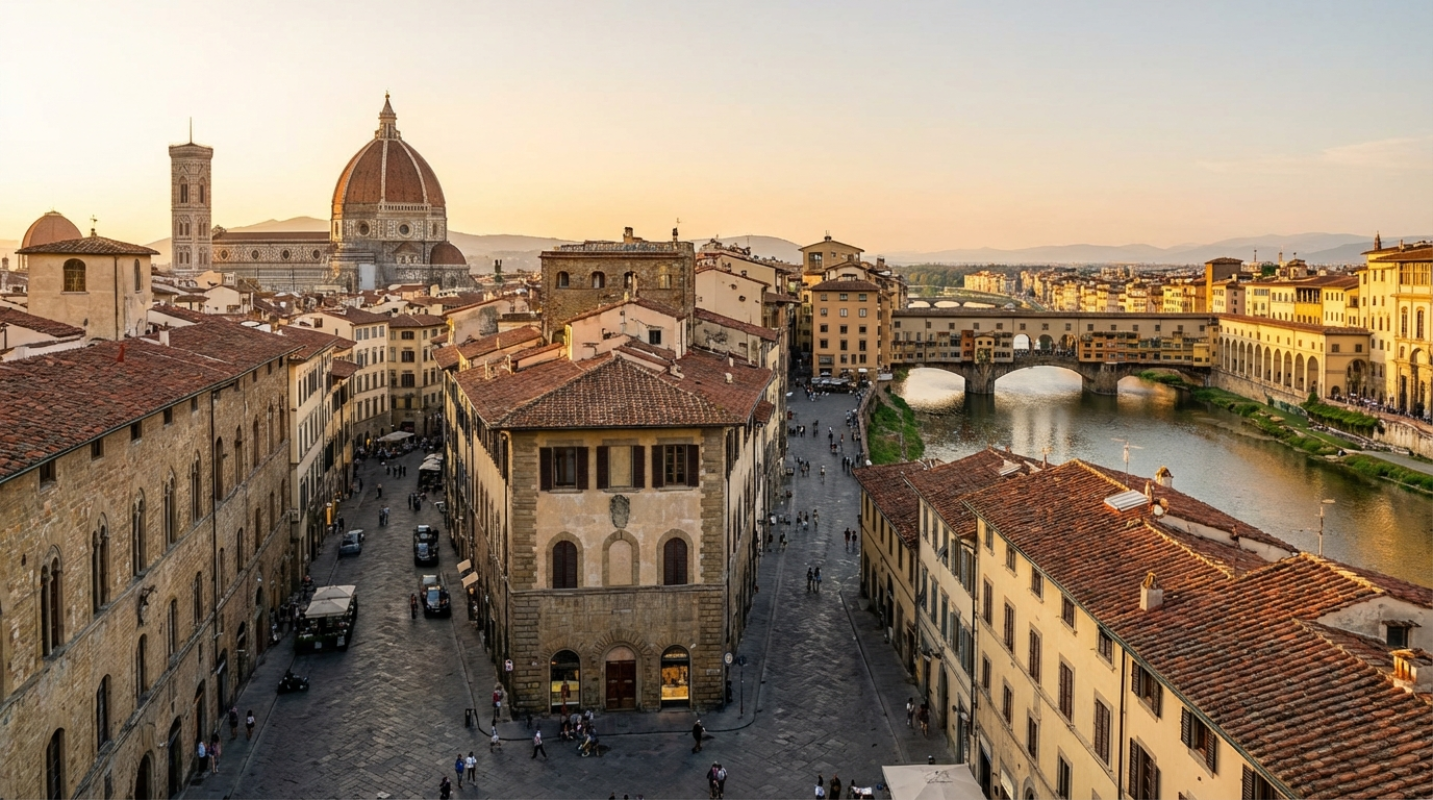
When you think of architectural preservation, your mind likely jumps straight to Italy. Cities like Rome and Florence didn't just survive the centuries; they set the blueprint for how antiquity and the Renaissance should be managed. Their success relies heavily on stringent zoning laws and powerful oversight, particularly from UNESCO, which protects their "Outstanding Universal Value."
But running a city like Rome today is an exercise in managed chaos. Think about the infrastructure: ancient ruins aren't just tourist backdrops; they are integrated into the city's modern bones. This requires constant, proactive maintenance. The Capitoline Council, recognizing this pressure, approved the 2024-2030 Management Plan for the Historic Center of Rome, explicitly aiming to balance tradition and technology in its conservation efforts.¹
The preservation work here is increasingly high-tech. Like, a major digital twin project for St. Peter’s Basilica, completed in 2024, processed over 400,000 high-resolution photos into an ultra-precise 3D model. This isn’t just cool documentation; it’s predictive maintenance. AI algorithms are now used to detect minute structural vulnerabilities, such as cracks and missing mosaic tiles, allowing curators to prioritize repairs based on data alerts.¹
The biggest challenge these centers face isn't decay; it’s mass tourism. Millions of footsteps, bus vibrations, and the sheer volume of human traffic place immense stress on fragile materials. How do you keep the crowds coming - because heritage tourism funds the preservation - while simultaneously protecting the very structures the crowds came to see? It’s a delicate, ongoing negotiation between economics and engineering.
Mastering Modernity Although Honoring the Past – Kyoto and Prague
Moving beyond the Mediterranean, we find equally compelling, though structurally different, preservation models. Look at Kyoto, Japan. Its approach is defined by tradition, focusing on the continuation of intangible cultural heritage.
Kyoto’s preservation is less about stone and more about wood, and that requires a fundamentally different philosophy. Maintaining wooden machiya houses and temple districts against seismic and environmental pressures relies heavily on passing down traditional craftsmanship. When they restore sites like the Kiyomizu-dera Temple (established in 778), they adhere strictly to original construction methods, such as the tsugite joinery technique that uses no nails or screws. This ensures that the specialized knowledge, the "software" of the culture, is preserved alongside the physical building.
The city actively encourages this through initiatives like the "Machiya Renovation Project," which provides grants to property owners. The goal isn’t to turn these traditional townhouses into museums, but to update them for modern living while maintaining their historic character. That’s the key: functionality ensures survival. If the building is useful, it won’t be torn down.
Contrast this with Prague. Following the collapse of the Soviet bloc, the Czech Republic faced a massive challenge: restoring decades of neglected Gothic and Baroque streetscapes. Prague’s success story is rooted in rapid, centralized conservation funding mechanisms and a focus on restoring the city's pre-war glory. The result is a stunning, cohesive historic center where architectural styles flow seamlessly from one block to the next. The difference here is scale and speed; Prague had to execute a massive, time-compressed restoration project, proving that political transition can, surprisingly, accelerate preservation efforts if the will is there.
The Economics and Technology of Preservation
If Rome and Kyoto show us the why of preservation, the current technological revolution shows us the how. Preservation isn't just about scaffolding; it’s about data.
The role of advanced materials science and non-invasive survey techniques is now central to heritage management. Think of LiDAR (Laser Scanning) and 3D scanning. These tools capture sites with millimeter accuracy, creating what are often called "digital twins" of historic structures.³ These virtual replicas integrate real-time data from sensors monitoring vibration, humidity, and temperature. They allow preservationists to simulate the effects of climate change or pollution before they physically manifest.
So what does this actually mean for a city? In Genoa, Italy, a digital twin solution was deployed specifically to monitor and manage the impact of environmental factors on its UNESCO architectural heritage.² This real-time data helps prevent overcrowding in fragile zones during high pollution periods, directly aligning preservation with the city’s sustainability goals.
The economic argument for this investment is compelling. Heritage tourism is an enormous, sustainable revenue stream. Tourists don’t flock to cities that have let their history crumble; they come for the authenticity that rigorous preservation provides. Investing in digital conservation technology, while expensive upfront, acts as insurance for the city’s primary asset.
Experts are currently focused on climate-proofing historic materials. As extreme weather events become more common, preservationists are researching nanotechnology and nanomaterials to clean and consolidate ancient stone and fresco surfaces. It’s a high-stakes race against time, requiring both the wisdom of traditional artisans and the precision of modern physics.
Emerging Global Leaders: Innovative Preservation in Asia and the Americas
Although Europe perfected the early institutional models, the most innovative preservation work today is often happening in emerging global centers, demonstrating unique community-led models.
Take George Town, Malaysia, or Cartagena, Colombia. These cities, with their unique hybrid colonial and indigenous architectural styles, show that successful preservation often starts at the neighborhood level. In George Town, the emphasis is often on preserving the shophouse typology, which requires collaboration between diverse, multi-generational families who own the properties. It’s a bottom-up approach, contrasting sharply with the top-down governmental mandates of European centers.
A beautiful example of community-focused restoration comes from Tokyo, specifically the Inari-yu Bathhouse. This project received the highest honor in the 2024 UNESCO Asia-Pacific Awards for Cultural Heritage Conservation. It was recognized not just for the quality of the restoration, but for demonstrating how well-conserved heritage can actively build social cohesion and community resilience.
But success brings its own complex problems. Sound familiar? Gentrification is the dark side of effective preservation. Once a historic neighborhood is rekeyized, property values skyrocket, pushing out the very communities whose history and culture defined the area in the first place. Urban planners must now actively manage this outcome, often through rent control, specialized tax breaks for historic homeowners, or community land trusts, making sure that preservation doesn't become a tool for displacement.
Future-proofing also involves managing new construction adjacent to historic zones. Today, cities don't just ban new buildings; they require them to be sensitive to the scale and materiality of the historic context. You can build modern, but you can’t build jarring. It’s a design conversation that demands respect for the skyline, not just the street level.
Top Recommendations
If you’re planning a trip or a civic project focused on architectural heritage, here are some key areas and technologies to investigate
- Digital Twin Platforms - Look for vendors providing real-time monitoring systems that use sensor data to predict structural stress in historic buildings. This is the gold standard for proactive conservation.
- Traditional Skills Workshops - Seek out organizations in places like Kyoto that actively train new artisans in historic methods (like tsugite joinery). Preservation needs people, not just machines.
- Community Land Trusts (CLTs) - Research how CLTs are being used in cities like Charleston, South Carolina, to mitigate gentrification by keeping land costs permanently affordable, making sure that successful preservation benefits the original residents.
Building the Future of Architectural Memory
We’ve seen that the world’s great historic cities operate on several core preservation philosophies. Rome masters the high-tech management of massive, ancient stone structures. Kyoto prioritizes the preservation of process and craftsmanship. Emerging leaders focus on community involvement and social equity.
Preservation is not a static museum piece; it’s an active, ongoing investment. It’s about recognizing that every building is a finite, irreplaceable resource. When we talk about sustainability in urban planning, we often focus on energy efficiency and green spaces. But true sustainability starts with conservation, making the deepest focus on the structures we already possess.
For urban planners and policymakers, the message is simple: don’t treat history as an obstacle to progress. Treat it as the foundation. Embrace the hybrid methodology, marrying the artisan’s hand with AI’s prediction. When you preserve a city’s architecture, you aren’t just saving bricks and mortar; you are saving its memory, making sure that the legacy of those who built the past remains key for those who will build the future.
Sources:
1. The importance of the Digital Twin in the protection of cultural heritage in Italy
2. Digital Twins for the Protection of UNESCO Architectural Heritage in Genoa
3. World Heritage Day 2025: Celebrating the Digital Revolution in Heritage Preservation