 (Image source: Gemini)
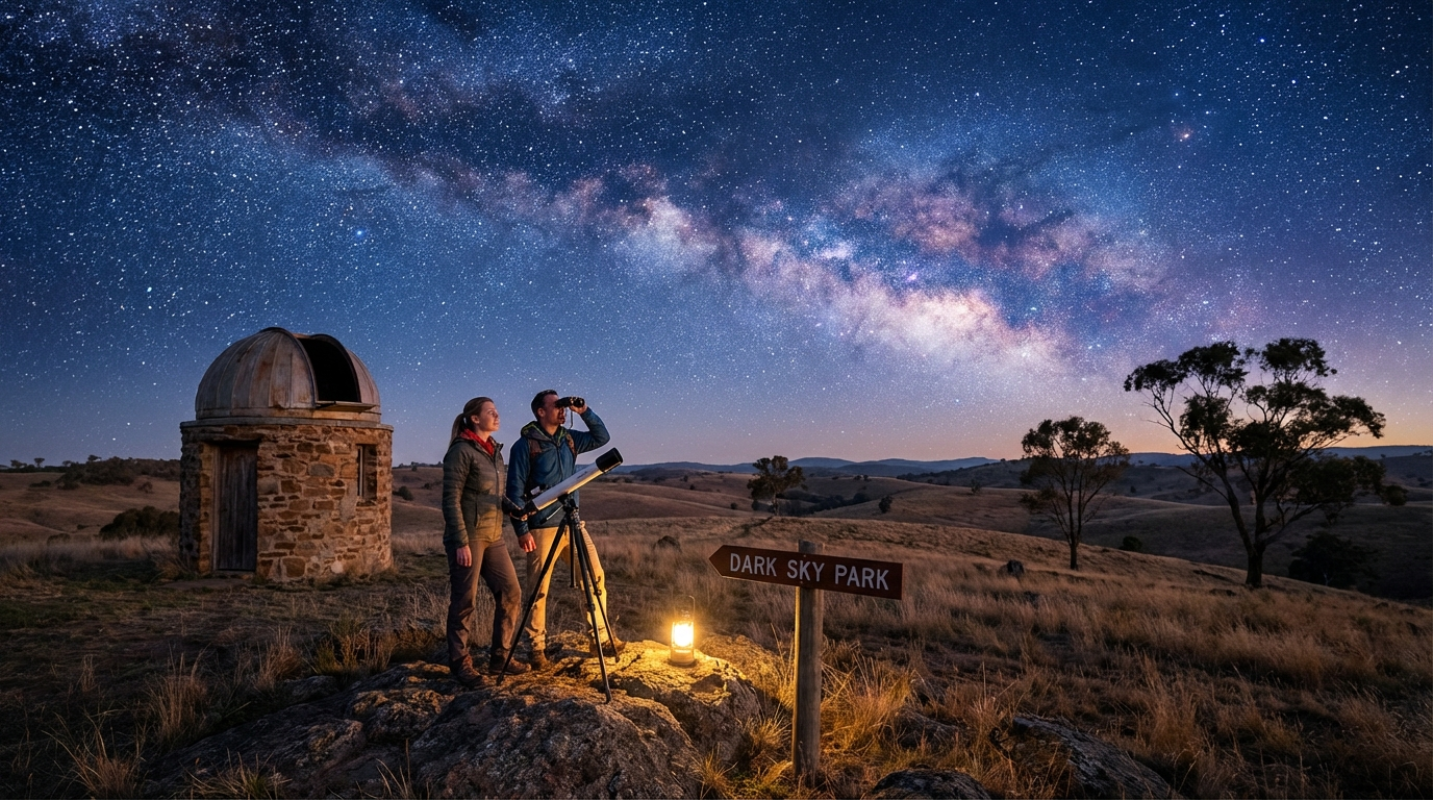
 When was the last time you saw the Milky Way? Not just a faint, hazy smudge, but the glorious, swirling river of light that defines our galaxy? For most people living within 100 miles of a major city, the answer is likely "never."
Light pollution is a global crisis. It doesn’t just waste energy; it severely impacts human health, disrupts wildlife migration, and, perhaps most tragically, for the dreamer, it steals the night sky. In fact, most of the developed world lives under skies so bright that only the Moon and the brightest planets are visible.
This is where the concept of the "Dark Sky Place" comes in.
To combat the relentless glow of urbanization, the International Dark-Sky Association (now DarkSky International) certifies specific locations around the globe that actively protect and preserve their nocturnal environment. These aren’t just remote spots; they are designated sanctuaries that maintain strict lighting policies. As of 2026, there are over 230 certified Dark Sky Places worldwide, spanning 22 countries and protecting vast stretches of the night sky.¹
The good news is that accessing truly dark skies is easier than you think. You don’t need a degree in astrophysics or a trip to a massive observatory. You just need planning, commitment, and a willingness to drive far past the last traffic light. This focus on darkness has fueled a boom in astrotourism, turning remote, rural destinations into bucket-list travel spots.
Iconic Dark Sky Sanctuaries
The United States and Canada are home to some of the largest and most accessible Dark Sky Preserves in the world. These locations offer stunning views without requiring a passport or a massive budget.
Big Bend National Park, Texas
If you want to experience the sheer scale of the night sky, head to Big Bend. Located deep in West Texas along the border with Mexico, Big Bend National Park is famous for having some of the darkest, most pristine skies in the contiguous United States. Its remoteness is its greatest asset. When you stand on the high desert floor here, you realize just how much light the cities are masking.
Because of the low humidity and high elevation, the atmosphere above Big Bend is exceptionally clear. During the summer core season (April through October), the Milky Way stretches overhead so brightly that it casts shadows. It truly looks three-dimensional.
Jasper National Park, Alberta, Canada
Thinking about combining dark sky viewing with mountain scenery? Jasper National Park in the Canadian Rockies is your answer. It is one of the world's largest Dark Sky Preserves, offering 11,000 square kilometers of protected wilderness.
Jasper’s viewing season is excellent year-round, but late autumn and winter offer the best chance to see the Aurora Borealis (Northern Lights) dancing above the frozen peaks. For the Milky Way, but target the summer months. The park hosts an annual Dark Sky Festival, but you can find spectacular viewing opportunities simply by pulling off the main roads and finding a designated viewing area like the Maligne Lake area.
Cherry Springs State Park, Pennsylvania
For those who live on the East Coast, escaping the light pollution often means traveling across the continent. Cherry Springs State Park in rural Pennsylvania is a important exception. Recognized as a Dark Sky Park, it’s a relatively small, highly sought-after location that is an important refuge for stargazers in the densely populated Eastern US.
The park features a dedicated viewing field where amateur astronomers set up their equipment. Due to its high elevation and the surrounding protected state forest land, it has a 360-degree unobstructed view of the horizon. If you’re planning a trip here, book far in advance; space is limited, and the demand is high for true darkness this far east.
World-Class Dark Sky Destinations
Although North America provides incredible opportunities, the Southern Hemisphere offers a unique celestial experience. When you cross the equator, the entire sky shifts, revealing constellations like the Southern Cross and offering a far superior view of the Galactic Core of the Milky Way, which is highest above the horizon in the South.
The Atacama Desert, Chile
If there is a holy grail for astrotourism, it is the Atacama Desert in Chile. This high-altitude, arid plateau is arguably the best place on Earth for clear skies. Why? The combination of extreme elevation, zero humidity, and almost non-existent light pollution means the sky is clear an estimated 300 days a year.²
The Atacama is littered with some of the world’s most powerful professional observatories, including the ALMA array. This is the place to go if you want guaranteed, breathtaking clarity. The viewing experience here is intense; the stars don’t just shine, they appear to pierce the atmosphere.
NamibRand Nature Reserve, Namibia
For the deepest, most untouched darkness, look to Africa. The NamibRand Nature Reserve in Namibia is one of the few places certified as an International Dark Sky Reserve, the IDA’s highest designation for remoteness and darkness.
Located in the Namib Desert, the reserve offers dramatic red dunes as foregrounds for astrophotographers. Because the population density is so low and the lighting controls are so stringent, the sky quality is exceptional. Viewing the Southern Milky Way here, stretched across the vast desert silence, is a truly transformative experience.
Planning Your Perfect Dark Sky Trip
A great star viewing trip requires more than just booking a ticket. It demands preparation, responsibility, and an understanding of the celestial rhythm.
Understanding the Celestial Calendar
The number one rule for dark sky viewing is simple: Avoid the Moon. The light from a full or nearly full Moon is strong enough to completely wash out the faint light of the Milky Way and nebulae. Always plan your visit around the New Moon phase.
The Milky Way’s core, the brightest part, is visible in the Northern Hemisphere from late spring through early autumn, typically setting in the Southwest. The best hours for viewing are generally between 10:00 PM and 4:00 AM, when the core is highest in the sky.
Needed Gear and Etiquette
You don’t need an expensive telescope to enjoy the night sky. Often, a good pair of binoculars (7x50 or 10x50) will provide stunning views of star clusters and the Moon.
More important than gear, but is your behavior. When you arrive at a Dark Sky Park, remember the rules
- Red Light Only: Use a red filter or a red LED headlamp. White light instantly ruins the night vision of everyone around you.
- Dark Adaptation: Give your eyes time. It takes 20 minutes or more for your eyes to fully adapt to the dark environment and achieve maximum sensitivity.³ Once adapted, even faint stars will pop.
- Arrive Early: Experts recommend arriving before sunset to scout your location. This allows you to identify hazards, set up your gear safely, and get comfortable without using any light after dark.
Top Recommendations for Best Viewing
To get the most from your experience, consider these practical tools and resources
- Light Pollution Maps: Use online tools like the Dark Site Finder to verify the darkness level (Bortle scale rating) of your target location before you go.
- PhotoPills or Stellarium: These apps are invaluable. They use augmented reality to show you exactly where the Milky Way core will be at any given date and time, allowing you to plan your composition or viewing angle perfectly.
- Comfort Items: Bring a reclining camping chair. Staring straight up for hours is exhausting. A comfortable chair prevents neck strain and keeps you warm.
Darkness Starts at Home
The effort to preserve the night sky isn't just about protecting those remote, rural destinations; it’s about recognizing the value of darkness everywhere. Every Dark Sky Park or Reserve is surrounded by communities that commit to using "dark sky friendly" lighting (fully shielded fixtures that point light down, not up).
This conservation effort requires local advocacy. Although we travel thousands of miles to see the Milky Way, we should also demand better lighting standards in our own towns. When a community reduces its light trespass, it saves energy but also improves the health and safety of its residents, allowing them to reconnect with the universe on clear nights.
Seeking out dark skies is a pilgrimage back to a fundamental human experience. It reminds us of our place in the cosmos, offering perspective and humility that city life often obscures.
Sources:
1. DarkSky International Certified Places
2. Best Locations for Astrophotography and Skywatching
3. The Ultimate Guide to Viewing the Milky Way
The information provided on MyUSAI regarding travel destinations, including but not limited to routes, prices, cultural descriptions, and historical data, is for general informational and educational purposes only.