 (Image source: Gemini)
 If you’re anything like the modern traveler, you’re tired of sanitized experiences. You want history you can touch, stories that echo, and architecture that hasn't been scrubbed clean for a theme park ride. You crave authenticity, and that’s precisely why historic mining towns, once forgotten relics of the industrial age, are experiencing a massive tourism boom.
These towns are more than just dusty backdrops for old Western movies. They are tangible links to the grit, innovation, and sheer audacity of the people who shaped the American West and industrial centers worldwide. They represent the ultimate boom-and-bust cycle, where fortunes were made and lost overnight, leaving behind dramatic physical evidence.
Today, these sites offer a singular blend of preserved architecture, compelling narratives, and surprisingly strong modern tourism amenities. Whether you seek the eerie silence of a true ghost town or a lively heritage center that has transformed into a recreational hub, mining heritage tourism provides an adventure that feels genuinely off the beaten path. This isn't just sightseeing; it’s unearthing the past while planning your modern expedition.
What Makes Modern Mining Town Tourism Relevant?
The perception of historic mining towns has deeply shifted. For decades, they were often viewed as dangerous, creepy ruins, perhaps good for a quick photo stop but little else. Now, they are recognized as living history museums, key centers for understanding industrial heritage, labor history, and environmental legacy.
This renewed interest is driven by a broader trend toward experiential and niche travel. Travelers, particularly younger generations, are actively seeking locations that offer cultural exploration blended with rugged, outdoor recreation. This search for authenticity and unique experiences has helped propel the global heritage tourism market, which was valued at nearly $20 billion in 2024 and continues to grow.
Themes of Perseverance and Legacy
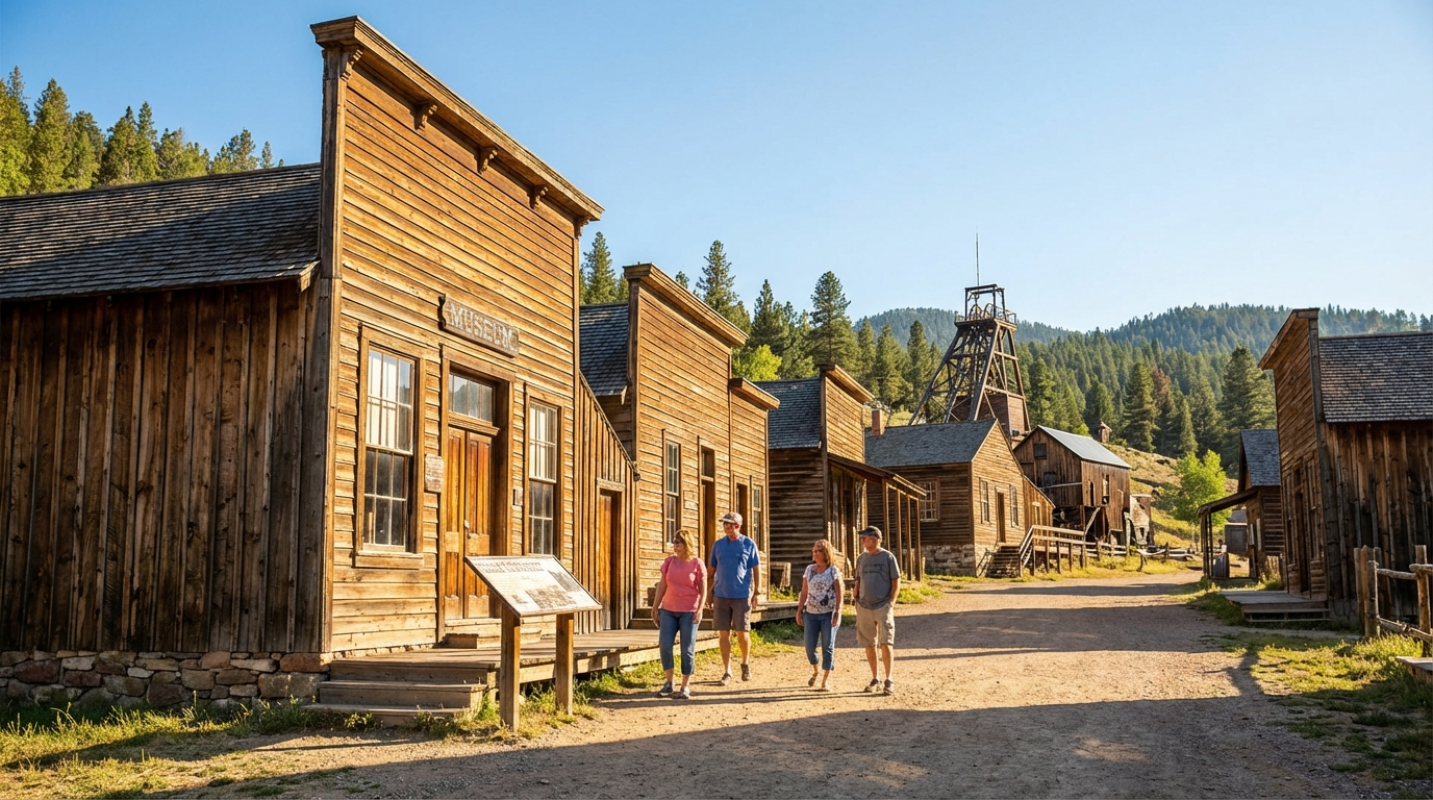
When you walk the uneven boardwalks of a copper town or stand beside a massive, rusting headframe, you are engaging with powerful themes. You see the perseverance required to carve a civilization out of a mountain, the innovation needed to extract wealth from the earth, and the subsequent environmental challenges that still define these regions today.
The appeal lies in the contrast: the fragility of human endeavor set against the permanence of the geological setting. Mining towns force us to confront the difficult questions of resource exploitation and industrial growth. It’s a compelling, complex story that modern travelers find far more engaging than simple historical fiction.
Economic Resilience Through Heritage
For the towns themselves, tourism isn't just supplementary income; it's often the lifeblood that ensures survival. Heritage tourism has the transformative potential to revitalize former mining communities, leading to economic resilience through diversified local economies.
Consider the Mountain West. States rich in mining history are seeing massive economic benefits by transforming their heritage assets into recreational hubs. South Dakota, home to the historic Gold Rush town of Deadwood, saw visitor spending top $5 billion in 2024, demonstrating the immense importance of heritage-rich tourism states. These small communities are using their history, often integrating it with modern attractions like mountain biking trails, downhill skiing, and cultural festivals.
Needed Stops
The best mining towns open to visitors today have mastered the art of balancing preservation with accessibility. They offer structured tours, detailed interpretive signage, and often, high-quality dining and lodging options.
Jerome, Arizona
Perched precariously on Cleopatra Hill, Jerome is often described as the largest ghost town in America, despite having fewer than 500 permanent residents. It was once a booming copper camp, producing a staggering volume of ore between 1883 and 1953.
Today, Jerome is an artist colony and a tourist haven, successfully attracting over a million visitors annually to its dizzying perch. The town is a case study in resilience, but its location presents constant challenges. Although you’re exploring the galleries and historic saloons, remember that the town constantly battles geological instability, including landslides and cracked roads, due to its position above old mine tunnels. It’s a place where history quite literally shifts beneath your feet.
Bodie, California
Bodie represents perfect preservation. Located in the remote Eastern Sierra, Bodie is preserved in a state of “arrested decay” as a State Historic Park. This means that nothing is restored, only maintained to prevent further deterioration.
When you walk through Bodie, you see bottles still on the saloon shelves, dishes on the tables, and tools exactly where the miners left them when the gold ran out. It offers the most authentic, untouched ghost town experience available in the US. It’s rugged, remote, and demands respect, but the rewards are unparalleled: a genuinely silent, chilling encounter with the past.
Global Heritage
The story of mining heritage isn't confined to the American West. Globally, these sites are recognized for their cultural importance. Take the Wieliczka Salt Mine near Kraków, Poland. Active since the 13th century, it is a UNESCO World Heritage Site, recognized as one of the world’s oldest continuously operated salt mines.
Visitors descend hundreds of feet underground to explore chapels carved entirely out of salt, massive chandeliers, and underground lakes. This site is a powerful reminder that industrial heritage can be transformed into stunning, accessible cultural tourism, demonstrating successful restoration and conservation efforts.
Top Recommendations for Immersive Tours
If you want to truly grasp the scale of the industrial age, you need to get inside the machinery or underground. These sites offer the most visceral experiences
- Butte, Montana - Visit the World Museum of Mining, which features a vast complex of industrial artifacts and offers tours focused on the intense copper mining history that made Butte "the Richest Hill on Earth."
- Park City, Utah - Although now famous for skiing, Park City’s historic downtown offers architectural walking tours that highlight its origins as a major silver mining center, successfully blending high-end recreation with industrial legacy.
- Deadwood, South Dakota - Beyond the Wild West shootouts, Deadwood offers detailed historical society tours that interpret the 1876 Gold Rush and the lives of iconic figures like Wild Bill Hickok and Calamity Jane.
Understanding the Experience: Practical Tips for the Contemporary Explorer
Visiting historic mining towns requires a slightly different approach than typical urban tourism. You’re often traveling to remote locations with limited services, so preparation matters.
Safety and Accessibility
Many former mining towns are situated in mountainous or high-desert environments. You must prioritize safety. This means checking local weather conditions, carrying extra water, and being aware of the inherent dangers of old structures. Never enter abandoned buildings unless they are explicitly designated for public access and are part of a guided tour.
If you are visiting a remote site like Bodie, be prepared for limited cell service and rough roads. Accessibility can be a major issue, as many preserved sites prioritize historical integrity over modern ADA compliance. Always check the park or town website ahead of time for specific accessibility notes.
The Role of Digital Immersion
The experience of walking through ruins is being amplified by technology. Travelers are demanding deeper, more authentic connections to the past, and towns are responding with digital tools. Look for sites using Augmented Reality (AR) improved history tours. These apps allow you to hold up your phone and see what a crumbling mercantile store looked like in 1890, overlaying the past onto the present moment. This experiential trend is helping remote areas turn their geographic isolation into a competitive advantage.
Respecting the Sites: Leave No Trace History
These sites are fragile, nonrenewable resources. Your interaction with them must be guided by respect and conservation. Adhere strictly to "Leave No Trace" principles, meaning you take nothing but photos and leave nothing but footprints.
It’s important to remember that these aren’t props; they are often someone’s former home or workplace. Avoid touching or climbing on historical structures, especially those designated as "arrested decay." The goal is to minimize environmental impact so that future generations can experience the same authenticity you did.
Balancing Tourism Demand with Authenticity
The increased popularity of mining towns presents a paradox. How do you welcome millions of visitors while maintaining the fragile historical character that drew them there in the first place? This is the central challenge facing preservationists today.
Infrastructure Versus Aesthetics
One of the greatest tensions is the conflict between preserving the early 1900s aesthetic and meeting modern infrastructure needs. It’s hard to run tour buses and provide clean water and proper sewage systems in a historic downtown built on shifting soil and outdated blueprints. Towns like Jerome, Arizona, despite their success, constantly face the enormous cost of battling nature while simultaneously keeping the lights on for tourists.
Experts emphasize that sustainable heritage tourism requires complete management. It demands community engagement and careful planning to make sure that development doesn't overwhelm the unique cultural and social values of the site. The goal is to avoid over-tourism that threatens the very resource people came to see.
A Tangible Link to History
Ultimately, historic mining towns offer us a necessary, tangible link to our industrial past. They tell a story of ambition, hardship, and the relentless human desire to conquer nature. They are not merely remnants of a bygone era; they are dynamic, changing communities that have found a powerful new purpose in sharing their history.
When you visit, you’re not just supporting a local economy; you’re investing in the complex, needed work of preserving a piece of the global industrial story. So pack your bags, lace up your boots, and prepare to step back in time. The dust may be old, but the stories are forever new.
Sources:
1. The Heritage Tourism Market is Projected to Reach USD 21.4 Billion by 2025
2. Travel Trends Report 2025: Go Off The Beaten Track
3. South Dakota Tourism Industry News
4. Mining Heritage and Mining Tourism
The information provided on MyUSAI regarding travel destinations, including but not limited to routes, prices, cultural descriptions, and historical data, is for general informational and educational purposes only.