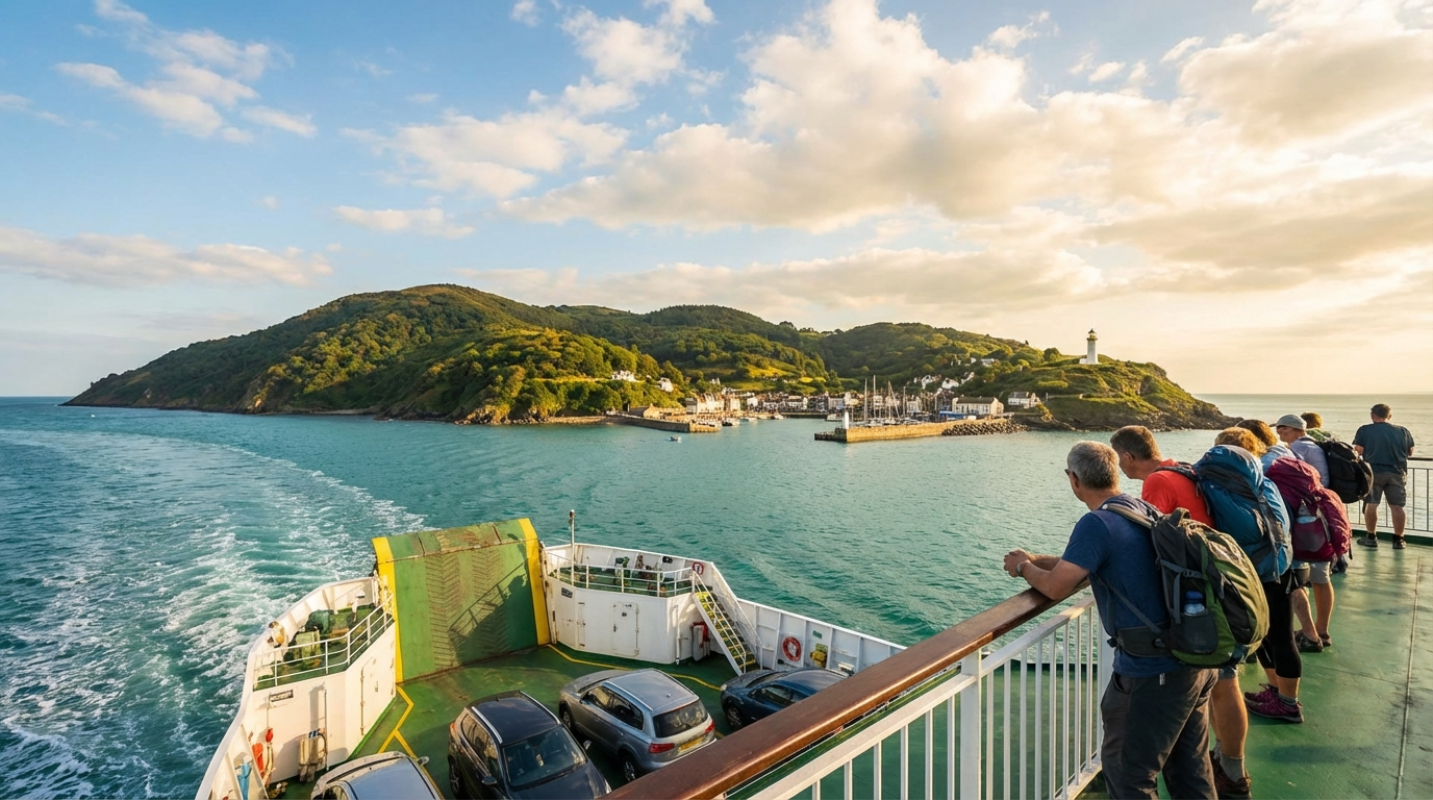
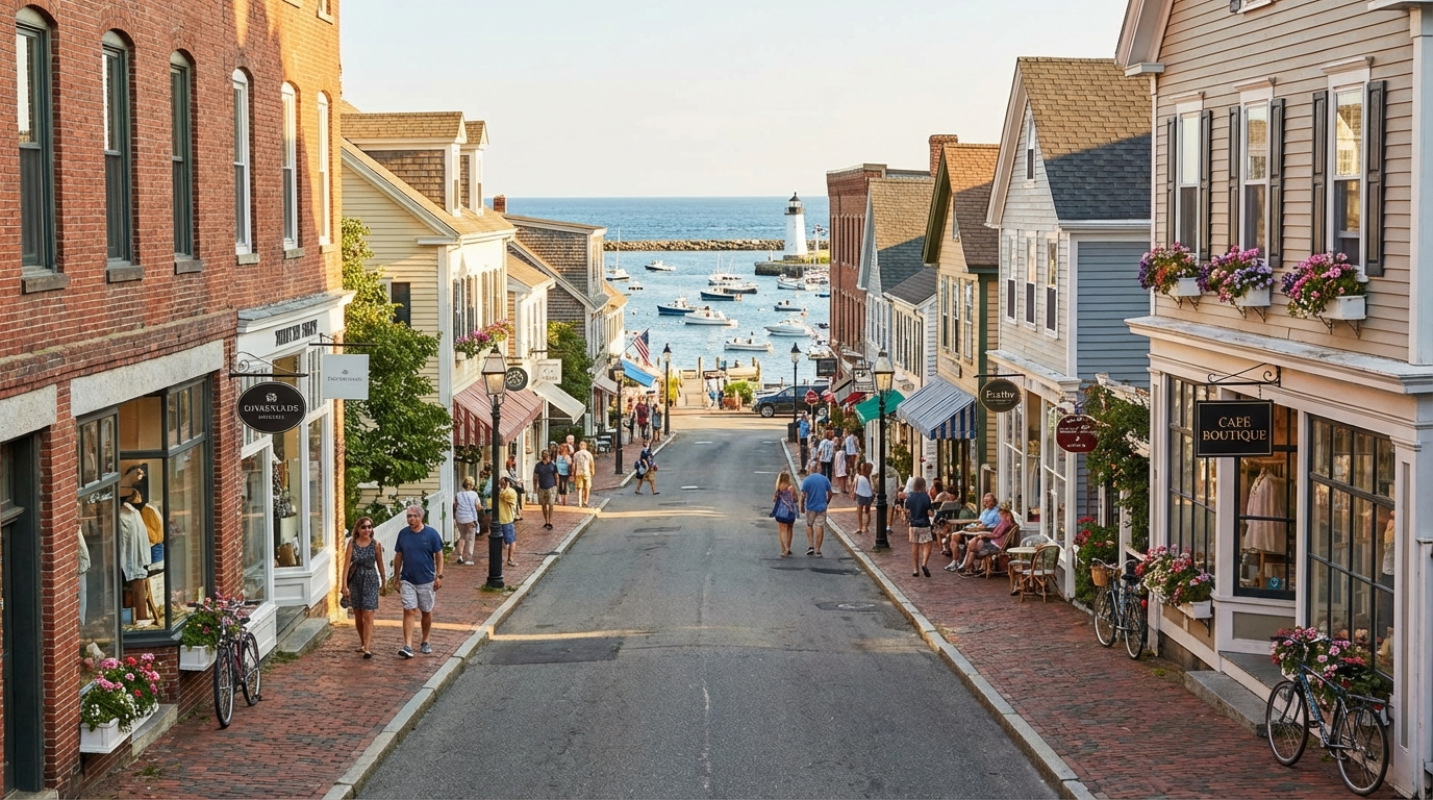
 (Image source: Gemini)
 There is a special brand of travel anxiety that hits the moment you reach your destination: the parking panic. You’ve driven hours, the sun is setting over the water, and you realize the quaint, historic downtown you envisioned is actually a congested labyrinth of one-way streets and prohibitively expensive garages.
That sinking feeling is exactly why the small coastal town with a truly walkable downtown has become the ultimate travel aspiration. We aren’t just looking for seaside charm anymore; we’re looking for connection - a place where the car is irrelevant, and the entire experience unfolds at the speed of human movement.
The Lasting Appeal
When you visit a coastal town, you want the salty air, the sound of the gulls, and the spontaneous discovery of a hidden alley café. You don't want the stress of parallel parking a minivan.
Walkable downtowns offer immediate experiential benefits. They transform the journey from Point A to Point B into part of the vacation itself. Think about it: when you park once and leave your keys in the hotel room, your brain instantly relaxes. The entire environment is suddenly accessible, whether you’re strolling to the lighthouse or grabbing a morning coffee.
This "feet-first" approach is the antithesis of the sprawling, car-dependent resort town. It’s the difference between seeing a destination through a windshield and feeling it under your feet. This preference is driving economic approach in coastal communities across the country, rewarding towns that prioritized human scale over vehicular throughput decades ago.
Anatomy of a Successful Coastal Downtown
A genuinely walkable coastal downtown doesn’t happen by accident. It requires intentional design and serious commitment from local governance. These places are built on the principle that the human body, moving at a comfortable pace, should be the primary measure of urban planning.
The late Danish architect and urban planning icon Jan Gehl argued that cities should be designed for a walking speed of roughly 5 kilometers per hour, or 3.1 mph.³ Modernism and the dominance of the car caused planners to forget this comfortable human scale, resulting in places designed for speed, not life.
Successful coastal towns have remembered this lesson.
- Mixed-Use Zoning: This matters. Walkable downtowns blend residences, retail, and public services into a compact area. You can live above the shop where you buy groceries, and the beach is just three blocks away. This density ensures constant foot traffic, which is the lifeblood of small businesses.
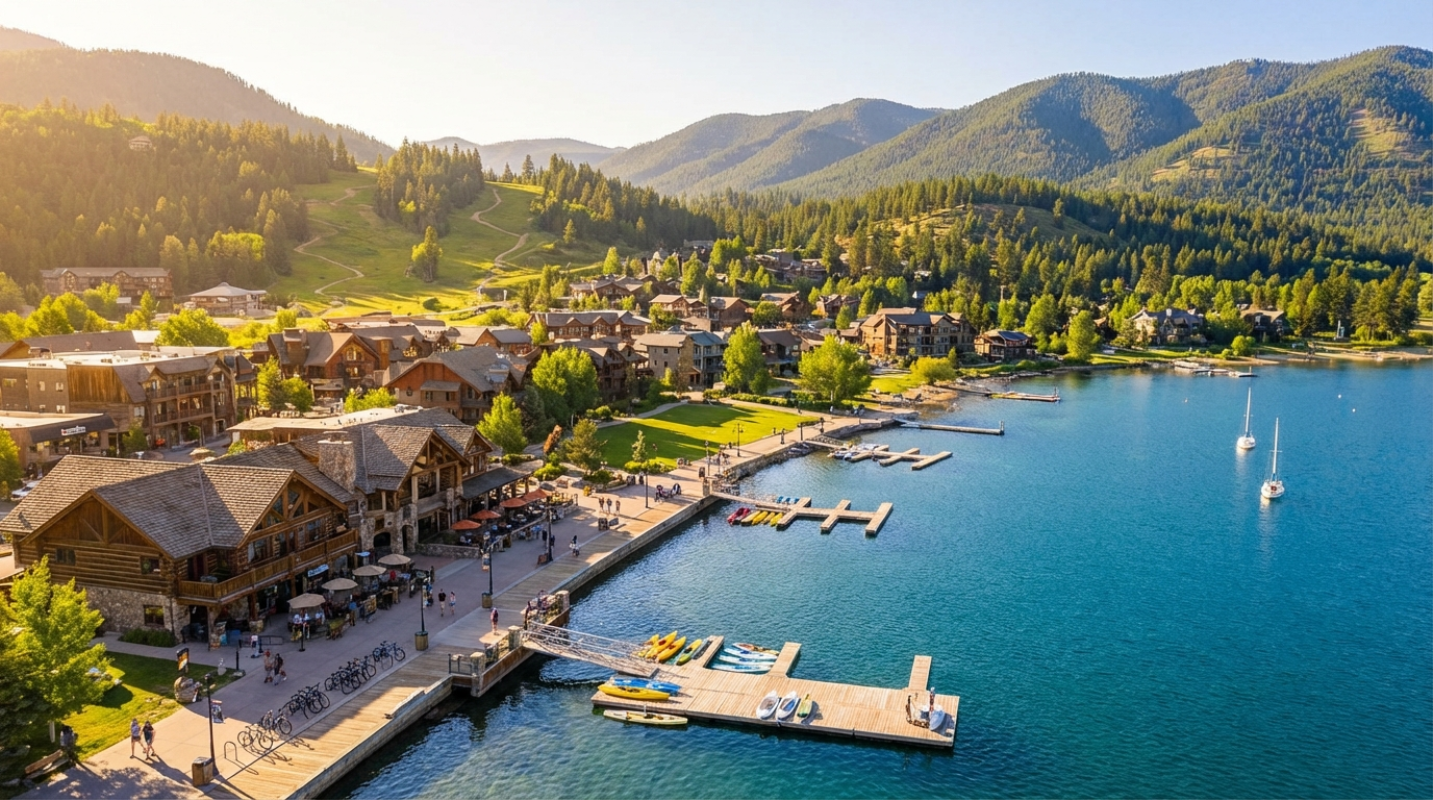
- Prioritizing People: Look for public seating, effective signage, and, importantly, access to the waterfront. Many coastal towns have historic waterfronts that were once dedicated entirely to industry or shipping. The most successful modern towns have reclaimed that space for boardwalks, parks, and dining.
- Preserved Architecture: Walkable zones thrive when buildings are built to the street edge, creating a continuous, sheltered corridor for pedestrians. In historic districts, local planning bodies work hard to maintain the scale and style, making sure the charming cobblestone streets remain intact. This preservation isn't just aesthetic; it’s functional, creating unique identity and improving heritage sites while generating tourism income.
In recent years, many municipalities have made temporary, pandemic-era street closures permanent. This signals a fundamental shift in community values toward pedestrian-oriented public spaces. It’s proof that when you give the street back to the people, the community identity increases.
Shopping, Dining, and Culture on Foot
What makes a compact downtown so much fun? The retail experience.
Walkable areas are natural incubators for independent businesses. Think about those tiny, perfect bookstores you always stumble upon, or the art gallery housed in a former fishing shack. These unique retail experiences thrive on high foot traffic and low barriers to entry. You don’t need a parking lot if everyone is already walking past your window.
In fact, studies have shown that protected pedestrian corridors can increase nearby retail sales by up to 30%.¹ When walking is easy, people browse longer, spend more, and feel less rushed.
The culinary scene benefits dramatically, too. Sea-to-table dining concepts feel authentic when the walk from the fish market to the restaurant kitchen is just a few hundred yards. Whether it’s a casual clam shack or a fine dining spot, these establishments become anchors in the local community, naturally suited to environments where patrons linger and explore.
Culturally, walkability integrates history and community into your daily routine. Historic markers aren't hidden behind highway off-ramps; they’re right there on Main Street. Local museums, community theaters, and gathering spots become accessible without a car, transforming the entire town into a living museum you can explore at your own pace.
Spotlight Destinations
Across the US, certain small coastal towns have mastered the art of the pedestrian experience. They offer diverse environments, from tropical heat to New England charm, but share the common trait of making driving optional.
Key West, Florida
This subtropical paradise is famous for its highly walkable historic district. Duval Street and the surrounding blocks are a pastel-hued maze of nineteenth-century architecture, bars, and boutiques. You can easily spend an entire week here without ever needing a car. Everything centers around Mallory Square, where the sunset celebration draws crowds that arrive solely on foot or bicycle. The layout, dense and compact, makes it feel less like a city and more like a permanent, tropical street fair.
Carmel-by-the-Sea, California
Just south of Monterey, Carmel is less a town and more an intimate, self-contained village. Its downtown core is only about one square mile, characterized by fairytale cottages, hidden passageways, and strictly enforced human-scale architecture. You won't find major chain stores here. The entire area is designed for leisurely browsing, culminating in a short, blissful walk down to the famous white-sand beach. Its unique culture and tight planning requirements keep it focused squarely on the pedestrian experience.
Wilmington, North Carolina
Although larger than many purely "small" towns, Wilmington’s historic downtown along the Cape Fear River is a leading coastal draw thanks to its active, multi-mile riverfront. The city has invested heavily in greenways and pedestrian access, attracting large waves of new residents looking for lower costs than the Northeast. You can walk the entire riverwalk, browse the shops, and access the historic district without ever getting back into traffic.
Trends in Sustainable Coastal Town Development
Maintaining the charm and function of these walkable hubs requires constant vigilance, especially in the face of climate change and rapid migration. Coastal towns face unique challenges, including sea-level rise and extreme weather events.
Modern planning approaches are increasingly focused on climate resilience while making sure walkability is maintained or improved. This involves elevating infrastructure, restoring natural buffers like dunes, and ensuring public spaces remain accessible even during high-water events.
Another key trend is the integration of micro-mobility. Although walking remains supreme, the rise of e-bikes and small electric scooters provides quick, low-impact ways to cover slightly longer distances without resorting to a car. These options naturally integrate with walking routes because they don’t require dedicated, high-speed infrastructure.
For travelers, supporting these unique community hubs means choosing local. When you spend your money at the independent bookstore or the family-owned café, you are directly investing in the economic model that keeps these downtowns active and pedestrian-friendly.
The economic evidence is clear: when towns invest in walkability, the rewards follow. Like, pedestrian improvements in Lodi, California, led to a drop in the commercial vacancy rate from 18% to just 6%, alongside a significant increase in sales tax revenues.²
The walkable coastal town is more than just a place to vacation; it’s a blueprint for better living. It reminds us that the best way to experience the world is slowly, intentionally, and on our own two feet.
Sources:
1. Economic Impact of Pedestrianisation in Historic Urban Centre
2. Walkability Case Studies and Examples
The information provided on MyUSAI regarding travel destinations, including but not limited to routes, prices, cultural descriptions, and historical data, is for general informational and educational purposes only.